

Dr. Tomasz Borecki is a specialist in Traditional Chinese Medicine (TCM) with over 25 years of experience. He was educated in China, where he developed his expertise in Eastern medicine. He actively promotes TCM in Poland and internationally. More information can be found in the “About Us” section.
Secrets to a Strong Immunity with TCM – Free Guide
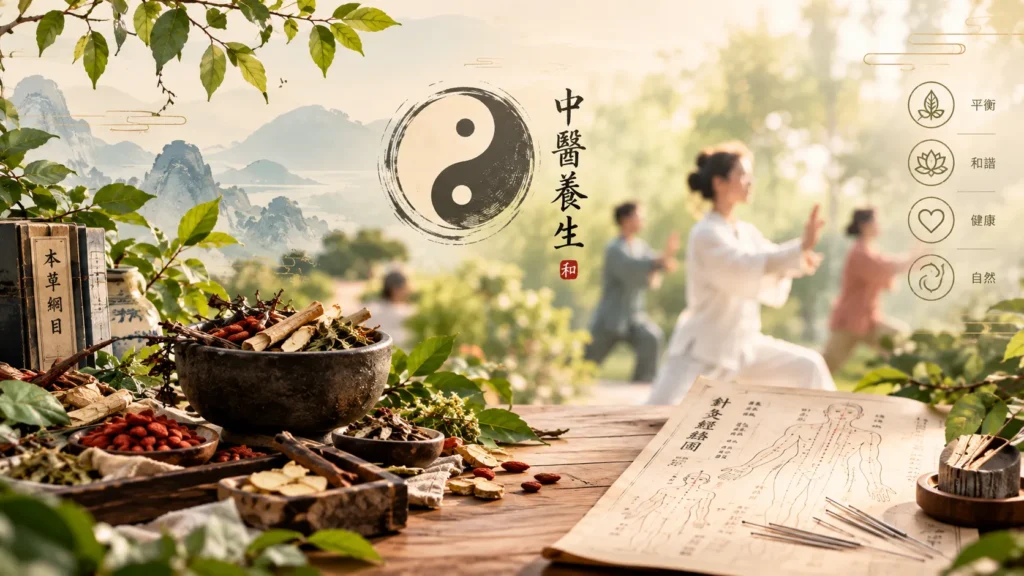
TCM and Immunity: 9 Ancient Habits That May Help Support Your Natural Defenses
There is a funny thing about autumn.
You can walk down the street and see ten different versions of how people treat their bodies.
One person is already wearing a scarf, drinking something warm and heading home before it gets dark.
Another is standing outside in a T-shirt saying, “It’s not even cold yet.”
Someone else is surviving on coffee, five hours of sleep and the vague promise that they will “catch up on the weekend.”
And then winter arrives.
Suddenly everyone starts looking for the perfect supplement, the perfect herbal tea, the perfect superfood or the one mysterious ingredient that will somehow make everything work better.
Traditional Chinese Medicine takes a rather different starting point.
Instead of immediately asking:
“What should I take?”
TCM often asks:
“What have I been doing every day that either supports or drains my body?”
That change of question is surprisingly important.
Because in the traditional Chinese medical model, wellbeing is not built by one miraculous ingredient. It is connected with sleep, digestion, daily rhythm, movement, rest, food, breathing and the way a person responds to changes in weather and stress.
And this is where the traditional concept of Qi enters the picture.
You may have seen Qi translated as “energy”.
That translation is convenient, but incomplete.
Qi is a traditional concept used in Chinese medicine to describe functional activity and processes within the body. It is not a measurable substance, and it should not be presented as the equivalent of a modern immune cell, hormone or laboratory marker.
The distinction matters.
At the same time, the traditional framework offers an interesting way of thinking about everyday health.
Instead of waiting until your body starts shouting for attention, perhaps it makes sense to listen when it is only whispering.
What Does “Immunity” Mean in Traditional Chinese Medicine?
Modern medicine describes the immune system using a detailed network of cells, tissues, antibodies, signalling molecules and physiological processes.
Traditional Chinese Medicine uses a completely different conceptual map.
One of the best-known ideas connected with protection is Wei Qi.
In traditional TCM theory, Wei Qi is associated with the body’s protective function and its relationship with external influences such as changes in weather and environmental conditions.
It is tempting to say:
“Wei Qi is the Chinese version of the immune system.”
But that would be too simplistic.
It is more accurate to say that Wei Qi is a traditional TCM concept describing aspects of the body’s protective function.
That may sound like a small distinction.
It isn’t.
TCM developed its own language centuries before modern immunology existed. Trying to force every traditional concept into a modern biological category can make an interesting system sound much more certain than the evidence actually allows.
A better approach is to appreciate both languages for what they are.
Modern immunology explains biological mechanisms.
TCM offers a traditional framework for observing patterns.
And those observations can include things such as:
- energy levels throughout the day
- appetite
- digestion
- sleep quality
- sensitivity to cold
- physical activity
- emotional tension
- recovery after exertion
- eating habits
- daily routine
This is one reason two people with apparently similar complaints may receive very different recommendations within a traditional TCM setting.
The emphasis is not simply on the name of a symptom.
The emphasis is on the overall pattern.
Also check out our guide: THE BETTER SLEEP & STRESS RELIEF GUIDE
The TCM Idea of Qi: Why the Basics Matter So Much
Qi is probably one of the most misunderstood words in discussions about Chinese medicine.
It is often described as some invisible force moving through the body.
That makes for a good movie script, but it does not really explain how the concept functions within TCM.
In traditional Chinese medicine, Qi is a broad conceptual category connected with the functional activity of the body.
Different forms and aspects of Qi are described in classical theory.
For everyday purposes, however, you can think of the TCM approach as asking whether a person’s lifestyle is helping them maintain their resources — or constantly spending them.
And this is where things become surprisingly practical.
Supporting Qi, in a traditional sense, can involve remarkably ordinary habits:
regular meals
Discover more details in the full guide: TCM DIET SECRETS: HOW FOOD CONTROLS YOUR ENERGY, MOOD & ORGANS
adequate sleep
moderate physical activity
periods of genuine rest
appropriate protection from cold
calm breathing
less chronic overwork
food that agrees with your digestion
None of this sounds particularly exotic.
And perhaps that is precisely the point.
We live in a culture that loves complicated solutions.
A twelve-ingredient powder feels more exciting than going to bed at 10:30.
A rare herb sounds more impressive than eating lunch without answering emails.
A new supplement is easier to buy than changing a chaotic daily schedule.
But the body does not necessarily care which option sounds more impressive.
The First Secret: Stop Looking for the Magic Ingredient
One of the most useful lessons you can take from TCM is surprisingly simple:
Your daily routine matters more than the occasional “health boost.”
Imagine someone sleeping four or five hours every night.
They skip breakfast.
They spend the entire day sitting.
They eat quickly between meetings.
They drink several coffees to stay productive.
They exercise intensely when they finally have free time.
Then, at the weekend, they buy an expensive herbal product because they feel exhausted.
There is nothing inherently wrong with the herb.
But it may not be the most interesting part of the story.
The more interesting question is:
What is happening during the other 167 hours of the week?
This is very close to the traditional TCM way of thinking.
Rather than constantly adding things, look at the overall pattern.
What is draining you?
What supports you?
What keeps repeating?
What happens every morning?
What happens every evening?
And what happens when you ignore the warning signs?
Wei Qi: The Traditional Protective Qi
Wei Qi deserves a closer look because it is often mentioned whenever TCM and immunity are discussed.
In classical TCM theory, Wei Qi is associated with the body’s exterior and its relationship with the outside environment.
Traditional texts describe it as having a protective role.
For a modern reader, this can be understood as part of the traditional language of TCM, rather than as a scientific description of the immune system.
That distinction should remain clear.
There is no single laboratory test for “Wei Qi”.
You cannot walk into a clinic and receive a blood result saying:
“Your Wei Qi is 73% today.”
That is not how the concept works.
Instead, a traditional practitioner may consider a wider collection of observations.
Does someone tend to feel unusually vulnerable to cold?
Do they tire easily?
How is their appetite?
How do they sleep?
How quickly do they recover after physical effort?
What does their tongue look like?
What does the pulse feel like to a trained TCM practitioner?
What is happening in their daily routine?
These observations form part of a traditional diagnostic framework.
And that leads to another important idea.
Why TCM Talks So Much About the Spleen
If you have ever read about Traditional Chinese Medicine, you have probably noticed something strange.
The Spleen seems to appear everywhere.
Digestion.
Food.
Energy.
Fatigue.
Diet.
Qi.
What is going on?
The first thing to understand is that the TCM concept of the Spleen is not identical to the anatomical spleen described by modern medicine.
This is one of those areas where translation can create confusion.
In traditional Chinese medicine, the Spleen is part of a functional system associated with transforming and transporting food and supporting the production of Qi from nourishment.
The Stomach and Spleen are therefore traditionally considered central to the body’s ability to make use of what is eaten.
That is why food plays such an important role in TCM.
And this is also why a TCM practitioner may ask questions that seem surprisingly ordinary.
Do you eat at regular times?
Do you feel heavy after meals?
Do you prefer warm or cold food?
Do you often eat late at night?
Do you eat while working?
Do you regularly crave sweets?
Do you feel sleepy after eating?
None of these questions sounds particularly dramatic.
But together, they create a picture.
Your Digestive System Doesn’t Know You’re in a Hurry
Modern life has created a strange relationship with food.
We eat while driving.
We eat while typing.
We eat while watching television.
We eat while scrolling.
We eat while answering messages.
Sometimes we barely remember that we ate at all.
Traditional Chinese dietary practice places much more emphasis on the circumstances surrounding a meal.
That does not mean every meal needs to become a meditation ceremony.
You don’t need incense, silence and a gong.
Start smaller.
Sit down.
Put the phone away.
Chew.
Slow down.
Jia Wei Xiao Yao Wan
An emotional & digestive support champion. It helps release stress, ease bloating, PCOS
👉 [See on Amazon]
👉 [Check on eBay]
👉 [Check out Acana herb shop (herbal products are handcrafted)]
Notice whether you are actually hungry.
Eat food that you digest comfortably.
And give your body a chance to process the meal without simultaneously dealing with a dozen other demands.
Sometimes improving a meal means changing what happens around the plate, not adding another ingredient to it.
Warm Food, Cold Food and the TCM Approach to Diet
One of the most familiar features of traditional Chinese dietary therapy is the idea that foods have different qualities.
Some foods are traditionally described as warming.
Others are cooling.
Some are considered more nourishing.
Others are lighter.
Again, these are categories within the traditional system and should not be confused with modern nutritional measurements.
During colder seasons, traditional Chinese dietary practices often place more emphasis on warm, cooked meals.
Think:
- soups
- stews
- porridges
- cooked vegetables
- rice dishes
- gently prepared grains
- warm breakfasts
But there is no need to turn this into a rigid rule.
TCM is not saying that everyone on the planet must eat soup three times a day.
Individual tolerance matters.
Someone who feels comfortable eating fresh fruit and salads does not automatically need to eliminate them because autumn has arrived.
The traditional approach is more nuanced than that.
The goal is not to make every meal “more Chinese.” The goal is to pay attention to how food fits the individual.
Learn more in our free guide: COMPLETE TCM DIET GUIDE FOR BEGINNERS
Five Everyday Habits That Fit the TCM Philosophy
If you want to explore TCM without immediately buying herbs, start here.
1. Give Sleep a Higher Priority
Sleep is one of the least glamorous health habits.
There is no fancy packaging.
No expensive subscription.
No complicated instructions.
You simply have to stop doing things and go to bed.
That may be precisely why it is so often neglected.
From a TCM perspective, night is traditionally associated with restoration and replenishment.
You don’t need to accept every traditional explanation literally to appreciate the practical message.
A body that never gets enough time to recover is being asked to operate continuously without proper downtime.
Try:
- keeping a relatively consistent bedtime
- reducing stimulating activities late at night
- finishing demanding work before getting into bed
- keeping evening meals comfortable rather than excessively heavy
- reducing unnecessary screen time
- creating a predictable wind-down routine
And if your sleep is consistently poor, don’t assume that another supplement is necessarily the answer.
Persistent sleep problems deserve proper attention.
2. Move — But Don’t Turn Everything Into a Competition
Exercise is good.
But more is not automatically better.
This is another place where traditional Chinese practices offer an interesting perspective.
Movement should support the person, not constantly exhaust them.
Walking is movement.
Stretching is movement.
Tai Chi is movement.
Qi Gong is movement.
Gardening counts.
Dancing in your kitchen counts.
A long walk after dinner can be more useful to your daily routine than an ambitious workout plan that you abandon after ten days.
This does not mean intense exercise is bad.
It simply means that different bodies have different capacities at different times.
A person who is already exhausted may benefit from a different form of movement than someone who feels strong and well-rested.
That is where the TCM principle of individualisation becomes interesting.
3. Learn to Breathe More Slowly
You breathe all day.
But how often do you actually notice your breathing?
Most people don’t.
Qi Gong practices often combine gentle movement, posture and breathing.
You do not need to learn a complicated sequence to begin.
Try sitting comfortably for a few minutes.
Relax your shoulders.
Let your breathing become slower and quieter.
Don’t force enormous breaths.
Don’t turn it into a performance.
Just notice what happens when you stop rushing.
Sometimes the simplest practice is the one you are most likely to repeat.
4. Eat at More Predictable Times
Your body may appreciate routine more than you realise.
Constantly changing meal times, skipping meals and eating very late can make everyday eating feel chaotic.
TCM traditionally places considerable importance on regularity.
That does not mean you need to eat at exactly 12:03 every day.
It means creating some rhythm.
Breakfast.
Lunch.
Dinner.
Reasonable portions.
Less constant snacking.
More awareness of hunger and fullness.
For many people, that is a much more useful starting point than searching for an exotic “immune-boosting” ingredient.
Healing Herbal Soups: Boost Your Immunity and Weather the Seasons with Traditional Chinese Recipes: A Cookbook
👉[See this book on Amazon paperback][Kindle]
5. Build Recovery Into Your Day
This may be the hardest habit of all.
Most people know how to work.
They know how to exercise.
They know how to stay busy.
But many people are surprisingly bad at doing nothing.
Five minutes of quiet can feel uncomfortable.
A walk without a podcast can feel strange.
Sitting without checking your phone can feel almost rebellious.
Yet recovery is not wasted time.
You cannot spend all of your resources and then be surprised when your body asks for a refund.
Huang Qi: The Famous Qi-Supporting Herb
Now we can talk about herbs.
One of the most famous is Huang Qi, commonly known in English as Astragalus.
The botanical name most often associated with the traditional Chinese medicinal material is Astragalus membranaceus and related species used in Chinese herbal practice.
Huang Qi has a long history in traditional Chinese medicine.
Within TCM, it is traditionally classified among herbs used to support Qi.
It has also attracted considerable interest from modern researchers.
Scientific literature has investigated compounds found in Astragalus, including polysaccharides, saponins and flavonoids.
Human research exists as well.
A 2023 systematic review and meta-analysis examined 19 human studies involving 1,094 participants and investigated several measures related to humoral and cellular immune responses.
The findings are interesting, but this is exactly where careful language matters.
The studies were not all identical.
There was considerable variation between them.
Changes in selected biological markers do not automatically mean that everyone taking Astragalus will experience a meaningful health benefit.
So the responsible conclusion is not:
“Astragalus boosts your immunity.”
A more accurate statement is:
Research has investigated Astragalus for effects on selected immune-related measures, but the available human evidence has limitations and does not establish a universal effect for everyone.
That may sound less exciting.
It is also much more credible.
How Huang Qi Is Viewed in TCM
In traditional practice, Huang Qi is not simply a universal “immune herb”.
A TCM practitioner may consider whether the person shows a pattern traditionally associated with Qi deficiency.
That assessment may include fatigue, digestion, appetite, spontaneous sweating, voice strength and other observations within the traditional framework.
One informative resource is: “Astragalus: Ancient Herb for Modern Times”
👉 [See this book on Amazon paperback][Kindle]
The herb is then considered in context.
This is very different from the modern marketing formula:
Feeling tired? Buy this.
Traditional herbal medicine is more individualised than supplement advertising often suggests.
And if someone takes prescription medicines, has a chronic medical condition, is pregnant or breastfeeding, or is already using several herbal products, professional advice is particularly important.
Natural does not mean automatically risk-free.
Huang qi ( Astragalus)
Energizing, balancing, immune-supporting, gentle
👉 [See on Amazon]
👉 [Check on IHerb]
👉 [Check out Acana herb shop (herbal products are handcrafted)]
Bu Zhong Yi Qi Wan: A Classic TCM Formula
Another well-known traditional formula is Bu Zhong Yi Qi Wan.
The name is commonly translated in connection with supporting the middle and benefiting Qi.
Within traditional Chinese medicine, the formula is associated with particular patterns involving Qi deficiency and the “middle” functional system.
That does not mean it is suitable for every person who feels tired.
This is an important point because formulas in TCM are often misunderstood outside their traditional context.
They are not simply ancient versions of one-size-fits-all supplements.
A classical formula is traditionally selected according to a pattern.
Two people can both complain of low energy and receive completely different approaches.
That is one of the reasons self-prescribing complex herbal formulas can be problematic.
If you are taking medication or have an ongoing health issue, discuss herbal products with an appropriately qualified healthcare professional.
Bu zhong yi qi wan
👉 [See on Amazon]
Huang qi ( Astragalus)
Energizing, balancing, immune-supporting, gentle
👉 [See on Amazon]
👉 [Check on IHerb]
👉 [Check out Acana herb shop (herbal products are handcrafted)]
Jia Gu Lan: The Plant That Keeps Attracting Attention
Jia Gu Lan, or Gynostemma pentaphyllum, is another plant associated with Asian traditional medicine.
It has attracted scientific interest because of compounds known as gypenosides.
Research has explored a variety of possible biological effects, particularly in laboratory and preclinical settings.
But there is an important lesson here.
Another helpful resource is: “Jiaogulan – China’s ‘Immortality Herb’“
👉 [Check the price on Amazon paperback][Kindle]
A plant can have a fascinating history.
It can contain biologically active compounds.
It can be the subject of hundreds of scientific papers.
And we can still say:
“We need more good human evidence before making strong claims.”
That is not a weakness.
It is what responsible health communication looks like.
Traditional use and modern evidence are two different categories.
They can be discussed together without pretending that one automatically proves the other.
Jiao gu lan
Calming, revitalizing, subtle, restorative
👉 [See on Amazon]
👉 [Check on IHerb]
What About Shiitake, Ginger and Oats?
You don’t need a cupboard full of exotic ingredients to explore traditional Chinese dietary principles.
Some very ordinary foods fit beautifully into a TCM-inspired kitchen.
Ginger
Fresh ginger, known traditionally as Sheng Jiang, is commonly described in TCM as warming.
It is easy to use in everyday cooking.
Add a few slices to soup.
Grate it into a stir-fry.
Use it with rice.
Add it to a warm drink.
But more is not necessarily better.
Someone who already tends to feel overheated may not appreciate large amounts of strongly warming foods.
Again, individual context matters.
Oats
Oats are wonderfully unglamorous.
And that is part of their appeal.
A warm bowl of porridge with cooked apple, cinnamon and a few nuts can make a simple breakfast during colder weather.
From a TCM dietary perspective, a warm cooked breakfast may be appealing for people who do not tolerate cold foods well in the morning.
There is no need to turn porridge into a mystical potion.
It’s breakfast.
And sometimes breakfast is enough.
Shiitake Mushrooms
Shiitake have a long history in Asian cuisine and traditional food culture.
They are easy to add to soups, rice dishes, vegetables and broths.
The larger lesson is more important than the mushroom itself.
A supportive diet can be built around ordinary foods:
vegetables
whole grains
beans and lentils
adequate protein
fruit
healthy fats
water
Then you can add foods traditionally valued in Chinese cuisine.
Zu San Li: One of the Best-Known Acupressure Points
If you have explored acupressure, you have probably heard of Zu San Li, or ST36.
It is traditionally located below the knee on the lower leg and is one of the most frequently discussed points in Chinese medicine.
Within TCM, it is associated with the Stomach and Spleen systems and is traditionally used in approaches aimed at supporting Qi and overall functional balance.
For simple self-acupressure, the approach should be gentle.
Sit comfortably.
Locate the area below the knee.
Apply comfortable pressure.
Breathe normally.
Stay there for roughly 30–60 seconds.
Then repeat on the other side.
The pressure should not be sharp or aggressive.
And remember:
Acupressure is a traditional practice, not a replacement for medical assessment when something is genuinely wrong.
Guan Yuan: A Different Kind of Practice
Another well-known point is Guan Yuan, CV4, located on the lower abdomen.
In traditional Chinese medicine, it has associations with Qi, Jing and the lower functional region of the body.
Because this is an abdominal area, however, home practice deserves more caution.
There is no reason to press aggressively.
A much gentler option is simply placing your hand over the lower abdomen and breathing quietly for several minutes.
This can become a calming ritual before bed.
If you have unexplained abdominal pain, are pregnant, or have another condition involving the abdomen, avoid self-treatment and seek appropriate professional advice.
Tai Chi and Qi Gong: Why Slow Movement Can Be So Interesting
There is something almost rebellious about slow movement in a world obsessed with speed.
Modern exercise culture often celebrates intensity.
Faster.
Heavier.
Harder.
More repetitions.
Higher numbers.
Tai Chi and Qi Gong go in almost the opposite direction.
Slow down.
Feel your posture.
Coordinate breathing.
Move deliberately.
Stay present.
That does not mean these practices are magical.
It simply means they offer a different way of moving.
And researchers have become interested in them.
A 2020 meta-analysis included 19 randomised controlled trials with a total of 1,686 participants. The authors reported small statistically significant changes in some immune-cell-related measures, while findings for inflammatory markers were less consistent.
The quality and design of the studies varied.
That matters.
A laboratory change is not automatically the same thing as better protection against infection.
Still, the research is interesting enough to justify continued investigation.
And there is another obvious benefit.
Tai Chi and Qi Gong can provide regular gentle physical activity.
That alone makes them worth considering as part of a balanced lifestyle.
Interested in acupressure? Read the free beginner’s guide: ACUPRESSURE PRACTICAL GUIDE
You Don’t Have to Become a Tai Chi Master
A common mistake is thinking you need a 45-minute routine, special clothing and perfect technique.
You don’t.
Start with five minutes.
Stand comfortably.
Relax your knees.
Let your shoulders drop.
Move slowly.
Coordinate the movement with natural breathing.
If five minutes becomes ten, great.
If you eventually want to learn a full form, even better.
But don’t turn a calming practice into another item on your productivity checklist.
The moment your “relaxation routine” becomes another source of stress, something has gone wrong.
Stress, Sleep and the TCM View of Balance
TCM has traditionally placed considerable emphasis on emotional life and daily rhythm.
That does not mean traditional Chinese medicine has the same psychological models as modern psychiatry or neuroscience.
It doesn’t.
But it does recognise that a person is not simply a collection of isolated body parts.
Someone may sleep badly because they work late.
They may eat poorly because they are stressed.
They may stop exercising because they are exhausted.
They may drink more coffee because they slept badly.
Then the cycle repeats.
This is not uniquely “Chinese”.
It is simply human.
TCM’s emphasis on balance can therefore be useful as a practical reminder:
Look at the pattern, not just the individual symptom.
A Simple Morning Routine Inspired by TCM
You do not need to completely redesign your life.
Try this instead.
Wake up.
Drink some water.
Avoid immediately checking your phone.
Move gently for five minutes.
Take a few calm breaths.
Eat breakfast if that suits you.
Give yourself a few quiet minutes before the day becomes noisy.
That’s it.
No complicated supplement stack.
No expensive equipment.
No twelve-step protocol.
A Simple Evening Routine
The evening matters just as much.
Try finishing work before you get into bed.
Eat dinner at a reasonable time.
Reduce stimulating content late at night.
Take a short walk.
Stretch.
Sit quietly for a few minutes.
Practice gentle breathing.
Go to bed at a reasonably consistent time.
The point is not perfection.
A routine that you follow imperfectly for months is far more useful than a perfect routine that lasts four days.
What Happens When You Are Always “Running on Empty”?
Imagine a person who works long hours, sleeps badly, trains intensely and rarely takes a real day off.
Eventually they say:
“I don’t know what’s wrong. I just don’t have the same energy anymore.”
The instinct is often to add something.
Another coffee.
Another supplement.
Another workout.
Another productivity technique.
But perhaps the better question is:
What if the problem is not that you need more stimulation, but that you need more recovery?
This is very compatible with the traditional TCM idea of balancing expenditure and replenishment.
The answer may not always be “do more”.
Sometimes it is:
stop spending everything.
A TCM-Inspired Approach to Autumn and Winter
When the weather changes, you can make a few simple adjustments.
Keep your feet warm.
Dress appropriately.
Avoid sitting around in wet clothes.
Choose nourishing cooked meals if they suit you.
Maintain regular sleep.
Keep moving.
Take walks even when the weather is less inviting.
Create a calmer evening.
Don’t wait until you feel completely exhausted before resting.
These are not magical immunity tricks.
They are simply sensible ways of respecting your body during a demanding season.
Three Things TCM Can Teach Us About “Immune Support”
If we remove all the complicated terminology, three ideas remain.
1. Your habits form a pattern
One late night is not the whole story.
One unhealthy meal is not the whole story.
One missed workout is not the whole story.
The pattern matters more.
2. Digestion matters in the traditional model
TCM places enormous emphasis on how food is transformed and used.
That is why regular, comfortable eating is so important within the traditional framework.
3. Recovery is part of health
The human body is not a machine designed to operate at maximum output every day.
Activity and rest belong together.
What Does Modern Research Actually Say?
This is where it is worth slowing down.
Research into TCM herbs, Tai Chi and Qi Gong is growing.
But the evidence is not one giant block saying “TCM works” or “TCM doesn’t work”.
Different interventions have different evidence.
Different studies use different outcomes.
Some research looks at laboratory markers.
Some examines symptoms.
Some studies are small.
Some have methodological limitations.
Some findings are promising.
Others are inconclusive.
This is normal in scientific research.
For Astragalus, human studies have examined various immune-related measures.
For Tai Chi and Qi Gong, research has explored changes in immune-cell parameters and inflammatory markers.
But none of this means that an herbal formula or exercise practice should be presented as a guaranteed way to prevent illness.
A biological effect is not automatically a clinical outcome.
That distinction is particularly important when writing about “immunity”.
TCM and Modern Medicine Do Not Have to Be Enemies
There is a tendency online to turn health into a competition.
Modern medicine versus natural medicine.
Doctors versus herbs.
Science versus tradition.
That framing is not particularly useful.
Modern medicine is extremely valuable for diagnosis, emergency care, infectious disease management, surgery, pharmacology and many other areas.
TCM developed a different framework based on traditional observations, patterns and therapeutic practices.
The two systems do not use identical concepts.
Qi is not a cytokine.
Yin is not a hormone.
Wei Qi is not literally a population of immune cells.
And a TCM diagnosis should not be presented as though it were a laboratory diagnosis.
Once that is understood, the conversation becomes much more interesting.
You can explore traditional practices without pretending they are something they are not.
When You Should Not Blame Everything on “Weak Qi”
This is another important point.
If someone has persistent or severe symptoms, unexplained weight loss, breathing difficulties, significant pain, prolonged fever, unusual bleeding, fainting, sudden neurological symptoms or another worrying change in health, the answer should not simply be:
“Your Qi is weak.”
Those situations deserve appropriate medical assessment.
Traditional practices can be part of someone’s wellbeing routine, but they should not delay necessary diagnosis or professional care.
A traditional framework can complement responsible healthcare. It should not become a reason to ignore serious warning signs.
Two Everyday Examples
Let’s make this practical.
Example One: The Exhausted Office Worker
Imagine a 42-year-old woman who constantly feels drained in the afternoon.
She skips breakfast.
Lunch happens at her desk.
She works late.
She sleeps around midnight.
At weekends, she tries to compensate by sleeping much longer.
In a TCM consultation, the practitioner may notice a pattern traditionally associated with weakened Spleen Qi.
But before reaching for an elaborate herbal formula, the first step might be surprisingly boring.
Eat regularly.
Have a warm breakfast if comfortable.
Take a short walk.
Reduce late-night work.
Create a consistent sleep schedule.
Try a few minutes of gentle Qi Gong.
Only after those foundations are addressed might individual herbal support be considered.
The lesson is simple:
Sometimes the first “treatment” is removing chaos from your routine.
Example Two: The Man Who Never Slows Down
Now imagine a man in his fifties.
He works long hours.
He trains hard.
He eats whenever he gets the chance.
He goes to bed late.
He believes resting is something you do when everything else is finished.
The problem?
Everything is never finished.
In a traditional TCM framework, the focus might be less on “giving him more energy” and more on restoring balance between activity and recovery.
His routine could include:
- less intense exercise on some days
- regular meals
- earlier evenings
- gentle Qi Gong
- breathing exercises
- walking
- more consistent sleep
And perhaps the most important change would be psychological.
He would have to accept that rest is not failure.
It is part of the system.
The Most Common Mistakes People Make
Mistake 1: Searching for One “Immune Herb”
There is no universal herb that makes every person function better.
Huang Qi may have a traditional role.
That does not mean everybody needs it.
Mistake 2: Treating Sleep as Optional
No herbal tea can turn chronic sleep deprivation into proper recovery.
Mistake 3: Exercising Like You Are Punishing Yourself
Movement can be supportive.
Constant exhaustion is another matter.
Mistake 4: Eating Without Paying Attention
If every meal happens in front of a screen, you may never notice how you actually feel after eating.
Mistake 5: Mixing Several Herbal Products
Herbal products contain biologically active substances.
They can also interact with medicines.
More is not automatically better.
If you use prescription medicines or have a medical condition, discuss herbal products with a qualified professional.
Can You Build a “TCM Immunity Routine” Without Taking Herbs?
Absolutely.
And this may actually be the best place to start.
Try this for a week.
Morning
5 minutes: gentle movement
2 minutes: quiet breathing
Breakfast: something nourishing and comfortable to digest
During the day
Regular meals
Short walking breaks
Enough fluids
Less mindless snacking
A few minutes away from your screen
Evening
Lighter dinner if that suits you
Short walk
Less stimulating content
5–10 minutes of gentle Qi Gong or breathing
Consistent bedtime
Nothing revolutionary.
But consistency has a strange way of becoming powerful.
A Simple TCM-Inspired Winter Checklist
Save this list somewhere.
Sleep
Do I regularly get enough sleep?
Food
Are my meals reasonably regular?
Digestion
Do I generally feel comfortable after eating?
Movement
Do I move every day?
Recovery
Do I actually have periods when I am not working?
Stress
Am I permanently operating at maximum speed?
Warmth
Am I dressed appropriately for the weather?
Breathing
Can I spend a few minutes breathing calmly without checking my phone?
Routine
Does my daily schedule support me or constantly drain me?
And finally:
The big question
What is one thing I could stop doing that would give my body more room to recover?
That question may be more useful than another shopping list.
What About Supplements and Herbal Products?
This deserves a short reality check.
The word “natural” often creates a false sense of safety.
Plants can contain powerful compounds.
Some herbs affect enzymes.
Some influence blood clotting.
Some may interact with medicines.
Some products vary in quality.
And some products sold online may not contain exactly what consumers expect.
That is why traditional herbal products should be treated with the same common sense you would apply to any biologically active product.
If you are pregnant, breastfeeding, taking medication, preparing for surgery or managing a chronic condition, professional advice is especially important.
The goal is not to be afraid of herbs.
The goal is to use them intelligently.
The Real Meaning of “Supporting Immunity”
Perhaps we have made the word “immunity” too simple.
We see advertisements promising:
BOOST YOUR IMMUNITY
SUPERCHARGE YOUR DEFENCES
PROTECT YOUR BODY
But the human body is not a battery with a “boost” button.
Health is much more complicated.
And traditional Chinese medicine, despite its very different terminology, often approaches the subject through a similar idea:
Look at the whole pattern.
How do you sleep?
How do you eat?
How do you move?
How do you recover?
How do you respond to stress?
How do you handle seasonal changes?
How much are you constantly asking from yourself?
Those questions may not sound as exciting as the latest supplement.
But they are much harder to ignore once you start thinking about them.
The Interesting Part About TCM Is Not Always the Herbs
People often discover Chinese medicine because they are interested in acupuncture or herbs.
Then they discover something else.
The deeper lesson is often about rhythm.
Eat at sensible times.
Sleep regularly.
Move.
Rest.
Don’t constantly push through exhaustion.
Pay attention to your environment.
Notice how food affects you.
Notice how your mood changes when you stop rushing.
That is not necessarily “Chinese” in the modern sense.
It is simply a different way of looking at daily life.
And perhaps that is why the traditional framework continues to attract people.
A Note About Qi Gong and Daily Practice
You don’t need to believe that Qi Gong literally moves a measurable substance called Qi through your body to enjoy the practice.
You can approach it as a traditional movement and breathing discipline.
Stand.
Breathe.
Move slowly.
Pay attention.
Repeat.
Five minutes can become ten.
Ten can become twenty.
And eventually the practice may become one of those small parts of your day that you miss when you don’t do it.
That’s often how useful habits are built.
Not through dramatic transformations.
Through repetition.
Five Traditional Concepts Worth Knowing
If you want to explore TCM further, these terms are useful starting points.
Qi
A broad traditional concept related to functional activity and vitality.
Wei Qi
A traditional concept associated with the body’s protective function and relationship with external influences.
Pi Qi
“Spleen Qi” in TCM theory, associated with the traditional functional role of the Spleen in transforming and transporting nourishment.
Jing
A traditional concept associated with essence and foundational resources.
Shen
A broad TCM concept associated with spirit, consciousness and mental-emotional aspects of a person.
These concepts belong to the traditional medical framework.
They should not be treated as direct translations of modern physiological structures.
Frequently Asked Questions
Can TCM support natural immune function?
TCM includes traditional practices involving diet, lifestyle, movement, breathing, acupressure and herbal formulas that are traditionally used to support overall balance and vitality.
Modern research is also investigating some of these practices, but the strength of evidence varies considerably between interventions.
What is Wei Qi?
Wei Qi is a traditional TCM concept describing aspects of the body’s protective function and its relationship with external environmental influences.
It is not a direct equivalent of the modern immune system.
Is Astragalus an immunity herb?
Astragalus, or Huang Qi, has traditionally been used to support Qi.
Modern research has investigated its effects on selected immune-related biological measures.
The evidence does not justify presenting it as a universal solution for everyone.
Can everyone take Huang Qi?
No herbal product should automatically be assumed to be appropriate for everyone.
Medication use, pregnancy, breastfeeding, chronic health conditions and individual circumstances should be considered.
What is Bu Zhong Yi Qi Wan?
It is a classical TCM herbal formula traditionally associated with supporting Qi in particular patterns involving the middle functional system.
It is not simply a general-purpose supplement.
What is Jia Gu Lan?
Jia Gu Lan is Gynostemma pentaphyllum, a plant used traditionally in parts of Asia and investigated for its various bioactive compounds.
Can Tai Chi support wellbeing?
Tai Chi provides gentle physical activity, balance practice and coordinated breathing. Research has also examined its relationship with selected immune and inflammatory markers.
Is Zu San Li safe to massage?
Gentle acupressure is commonly practised, but pressure should not be painful or aggressive. Individual circumstances and contraindications should be considered.
Does a TCM diet have to contain Chinese food?
No.
Traditional dietary principles can be adapted to locally available foods.
The emphasis is more on preparation, regularity, individual tolerance and traditional food qualities than on eating exclusively Chinese ingredients.
Is warm food always better?
No.
Traditional dietary recommendations are individualised. Different people may respond differently to particular foods and preparation methods.
Can TCM replace modern medical care?
No.
TCM and modern medicine use different frameworks. Traditional practices should not delay appropriate medical assessment when concerning symptoms occur.
So, What Is the “Secret”?
After all this talk about Qi, herbs, food, sleep, breathing and movement, the answer may seem almost disappointingly simple.
There probably isn’t one secret.
There is a pattern.
A person who sleeps well but eats chaotically has one pattern.
A person who eats well but never rests has another.
Someone who exercises every day but sleeps five hours has another.
Someone who spends all day sitting and then performs one brutal workout every Sunday has another.
Traditional Chinese Medicine is interested in these relationships.
That is what makes it fascinating.
It asks you to step back.
Instead of staring at one symptom, one food or one supplement, look at the whole picture.
Your Body May Be Asking for Less, Not More
This may be the most useful idea in the entire article.
We are constantly told to add something.
Add protein.
Add supplements.
Add exercise.
Add productivity.
Add another routine.
Add another morning ritual.
Add another health hack.
But sometimes the answer is subtraction.
Less late-night work.
Less unnecessary stress.
Less random snacking.
Less alcohol.
Less sitting.
Less screen time before bed.
Less pushing through exhaustion.
Less trying to do everything at once.
Perhaps the body does not always need another thing from you. Perhaps it needs a little less to deal with.
That is a surprisingly TCM-like question.
A Final 7-Day Experiment
If you want to try the philosophy without buying anything, make this your experiment.
For seven days:
Wake up at roughly the same time.
Eat regular meals.
Have a warm breakfast if you enjoy it.
Walk every day.
Spend five minutes practising slow movement or breathing.
Stop working before bedtime.
Go to sleep at a reasonably consistent hour.
And here’s the important part:
Don’t judge the experiment after one day.
Don’t expect fireworks.
Just observe.
How is your energy?
How do you feel after meals?
How easy is it to fall asleep?
Do you feel more restless or less?
Do you reach for coffee as often?
Does your afternoon feel different?
This is very close to the observational spirit that makes traditional medicine interesting.
Pay attention.
Notice patterns.
Adjust.
Repeat.
The Bottom Line
TCM offers a completely different vocabulary for talking about health.
It speaks about Qi, Wei Qi, Yin and Yang, the Spleen, the Stomach, Jing and balance.
Modern medicine speaks about immune cells, antibodies, inflammatory pathways, hormones, organs and measurable physiological processes.
These are not interchangeable languages.
But that does not mean one has to erase the other.
You can appreciate the traditional wisdom of regular meals, adequate rest, gentle movement, breathing and seasonal awareness while still respecting what modern medicine tells us about the human body.
And when it comes to herbs such as Huang Qi, formulas such as Bu Zhong Yi Qi Wan, or plants such as Jia Gu Lan, curiosity is welcome — but so is caution.
Research can be promising without being conclusive.
Traditional use can be meaningful without proving every modern claim.
And “natural” does not automatically mean “safe for everyone”.
The Question Worth Taking With You
So, perhaps the most interesting TCM question is not:
“What should I take to strengthen my immunity?”
Maybe it is:
“What am I doing every day that makes my body work harder than it needs to?”
Maybe it’s the late nights.
Maybe it’s the skipped meals.
Maybe it’s the constant stress.
Maybe it’s the endless screen time.
Maybe it’s the belief that resting is something you have to earn.
Or maybe it’s something much smaller.
Five minutes of quiet.
A proper breakfast.
A walk.
An earlier bedtime.
A meal eaten without your phone.
A few slow breaths before you start answering messages.
None of these things will make a dramatic headline.
But health rarely happens in headlines.
It happens in ordinary Tuesday mornings.
It happens when you choose sleep instead of another hour of scrolling.
It happens when you eat before you’re completely exhausted.
It happens when you go for a walk even though there is no fitness tracker congratulating you.
It happens when you finally realise that recovery is not laziness.
And perhaps that is the most interesting lesson hidden inside the old TCM idea of balance:
You don’t always become stronger by adding more. Sometimes you become stronger by finally giving your body a chance to recover from everything you’ve been asking of it.
That may not be the most spectacular health secret.
But it might be one of the most useful ones.
Want to Explore TCM Further?
If you are interested in Traditional Chinese Medicine, you can continue with topics such as:
- What Is Qi in Traditional Chinese Medicine?
- The Spleen in TCM: Why Digestion Matters
- TCM Diet for Beginners: Eating With the Seasons
- Qi Gong for Beginners: A Simple Daily Practice
- Acupressure for Beginners: Traditional Points to Know
- Huang Qi: Traditional Uses and Modern Research
- Chinese Herbs Traditionally Used for Sleep and Relaxation
And if this article gave you something to think about, save it for autumn and winter.
Because when the cold weather arrives, the most useful thing in your cupboard may not be another supplement.
It may be a better routine.
Must-Read Books
One informative resource is: “Astragalus: Ancient Herb for Modern Times”
👉 [See this book on Amazon paperback][Kindle]
Another helpful resource is: “Jiaogulan – China’s ‘Immortality Herb’“
👉 [Check the price on Amazon paperback][Kindle]
Healing Herbal Soups: Boost Your Immunity and Weather the Seasons with Traditional Chinese Recipes: A Cookbook
👉[See this book on Amazon paperback][Kindle]
Everyday Chinese Medicine: Healing Remedies for Immunity, Vitality, and Optimal Health
👉 [See this book on Amazon Paperback][Kindle]
The Chinese Medicine Cookbook: Nourishing Recipes to Heal and Thrive
👉 [See this book on Amazon Paperback][Kindle]
and: The Five Elements Cookbook: A Guide to Traditional Chinese Medicine with Recipes for Everyday
👉 [Check the price on Amazon paperback][Kindle]
Sunpentown NY-656 3-4/5-Liter Chinese Herbal Medicine Cooker with Stainless Heater
👉 [See on Amazon ]
Authentic Traditional Chinese Medicine (TCM) Herbal Formulas
If you’re looking for high-quality, practitioner-recommended TCM formulas — available globally — consider the following options. These time-tested products are crafted with care and widely used to support emotional balance, digestion, energy, and overall wellness.
Note: This post contains affiliate links to products we’ve actually tried from reliable, certified sellers. Supporting these links helps maintain our blog. Thank you! 🙏
Top Herbal Formulas
Jia Wei Xiao Yao Wan
An emotional & digestive support champion. It helps release stress, ease bloating, PCOS
👉 [See on Amazon]
👉 [Check on eBay]
👉 [Check out Acana herb shop (herbal products are handcrafted)]
Huang qi ( Astragalus)
Energizing, balancing, immune-supporting, gentle
👉 [See on Amazon]
👉 [Check on IHerb]
👉 [Check out Acana herb shop (herbal products are handcrafted)]
Jiao gu lan
Calming, revitalizing, subtle, restorative
👉 [See on Amazon]
👉 [Check on IHerb]
These formulas are based on ancient herbal wisdom and used worldwide by TCM practitioners. Be sure to consult a professional for personalized advice.
Gou qi zi
Nourishing, antioxidant-rich, mild, sustaining.
👉 [See on Amazon]
👉 [Check on IHerb]
👉 [Check out Acana herb shop (herbal products are handcrafted)]
🎁 Get 5% OFF with this code!
Use promo code TCMHEAL5 at checkout to enjoy an exclusive 5% discount—available only at Arcana Herbs Shop.
At Arcana Herbs Shop in Chicago’s Chinatown, every formula is carefully prepared using traditional methods and natural ingredients. You can also browse and order our selections [here].
Sharing the wisdom of Traditional Chinese Medicine is our passion and calling.
If these words resonate with you, and you’d like to help me keep creating, consider offering a symbolic cup of green tea or support through Ko-fi.
Your kindness nurtures this work — like qi flows through the meridians
These articles may interest you:
COMPLETE DIET GUIDE FOR BEGINNERS
THE BETTER SLEEP & STRESS RELIEF GUIDE
10 TCM SECRETS FOR A LONGER, HEALTHIER LIFE
ALWAYS SICK IN WINTER AND SPRING? TCM TIPS FOR STRONG IMMUNITY
COLD HANDS AND FEET: TCM TIPS FOR CIRCULATION AND WARMTH
JIAOGULAN: THE “HERB OF IMMORTALITY” EVERYONE IS TALKING ABOUT
WHAT TO EAT EVERY DAY? 5 CHINESE MEDICINE RULES FOR BETTER HEALTH
THIS ONE POINT ON YOUR FOOT SUPPORTS KIDNEY STRENGTH
WINTER-TO-SPRING TCM DIET TIPS TO BOOST ENERGY