

Dr. Tomasz Borecki is a specialist in Traditional Chinese Medicine (TCM) with over 25 years of experience. He was educated in China, where he developed his expertise in Eastern medicine. He actively promotes TCM in Poland and internationally. More information can be found in the “About Us” section.
Complete TCM Diet Guide for Beginners
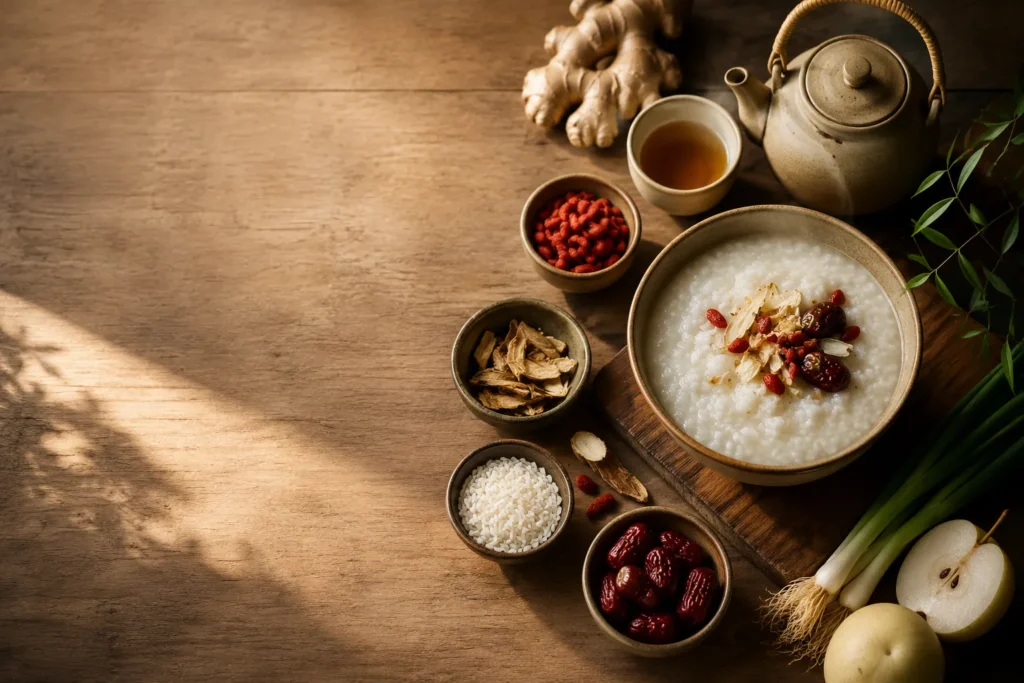
The Ancient Food Philosophy That Feels Surprisingly Modern
Long ago, if someone told me that warm rice soup and ginger tea could become more interesting to people than calorie-counting apps, I probably would have laughed. Yet here we are. More and more people are turning toward the TCM diet, searching for something calmer, simpler, and honestly… more human.
Traditional Chinese Medicine nutrition is not built around protein charts, trendy detoxes, or endless arguments about carbs. It looks at food differently. In TCM, meals are not just “fuel.” They are part of a bigger conversation between the body, energy, emotions, weather, sleep, stress, and daily habits.
For some people, that sounds mysterious at first. But after a while, it starts making weirdly good sense.
Because let’s be honest — modern eating habits can feel chaotic. Coffee on an empty stomach. Lunch eaten in front of a laptop. A protein bar replacing dinner. Then wondering why the body feels exhausted by 4 PM and suddenly wants sugar like its life depends on it.
TCM looks at this differently. It asks a very simple question:
How does your body actually feel after eating?
That question alone changes everything.
What Exactly Is the TCM Diet?
The TCM diet comes from Traditional Chinese Medicine, a system developed through centuries of observing nature, seasons, emotions, and human behavior. Instead of dividing foods into “good” and “bad,” it focuses on balance.
Some foods are considered warming. Others cooling. Some support energy and digestion, while others may leave the body feeling sluggish or heavy — depending on the person, season, and lifestyle.
And no, this is not about magic soups or ancient secrets hidden in mountain temples.
Sometimes TCM advice sounds almost ridiculously simple:
- eat warm meals more often
- slow down while eating
- avoid freezing drinks with every meal
- keep a regular eating rhythm
- pay attention to how your body reacts
That’s it.
Funny enough, many people notice changes after these small adjustments long before they try complicated diets.
One older TCM practitioner in Hangzhou once told me:
“The stomach likes warmth and routine. Humans create most of their own chaos.”
At the time, I thought it sounded poetic.
A few years later, after seeing people live on caffeine and stress, I realized he probably wasn’t joking.
Also check out our guide: THE BETTER SLEEP & STRESS RELIEF GUIDE
Why So Many People Are Interested in TCM Nutrition Today
Part of the reason is simple: people are tired.
Not only physically tired — mentally tired too.
Tired of tracking every calorie.
Tired of food guilt.
Tired of internet nutrition wars.
Tired of hearing that eggs are dangerous one year and a superfood the next.
The TCM approach feels different because it focuses less on obsession and more on observation.
Instead of strict rules, it encourages awareness.
That’s why many people become curious about it after years of trying extreme approaches. The body often sends signals long before medical tests show anything dramatic:
- heavy digestion
- low morning energy
- bloating
- afternoon crashes
- cravings late at night
- constantly feeling “off”
TCM views these patterns as signs that the body may be out of balance.
And honestly? Modern life makes balance difficult.
Many people eat while scrolling social media, answering emails, or rushing between meetings. Meals become background noise instead of an actual moment of nourishment.
TCM slows that entire process down.
Not in a trendy mindfulness-influencer way.
In a practical way.
Food Has Energy? Here’s What TCM Really Means
One of the biggest misunderstandings about TCM is the idea of “food energy.”
People hear that and immediately imagine mystical concepts floating around the kitchen.
But in practice, it’s much more grounded.
In Traditional Chinese Medicine, foods are observed based on how they affect the body after eating them.
For example:
| Food | Traditional TCM Nature |
|---|---|
| Ginger | Warming |
| Watermelon | Cooling |
| Rice | Neutral |
| Cinnamon | Warming |
| Cucumber | Cooling |
You’ve probably experienced this without realizing it.
A hot soup on a cold rainy day feels comforting and energizing.
An ice-cold smoothie in winter can sometimes leave people feeling strangely tired afterward.
TCM simply built an entire nutritional philosophy around these observations.
The system also pays close attention to seasons. Summer naturally invites lighter meals. Winter usually creates cravings for soups, stews, porridges, and cooked foods.
Nature already understands rhythm.
Humans just became very good at ignoring it.
The TCM Obsession With Warm Breakfasts
If there’s one thing almost every TCM practitioner repeats endlessly, it’s this:
Eat a warm breakfast.
Seriously. They talk about it the way fitness influencers talk about cold plunges.
And after spending time in China, I started understanding why.
Very few people there begin the day with cold yogurt straight from the fridge. Breakfast is often warm, cooked, and comforting:
- rice porridge
- soup
- steamed buns
- eggs
- warm soy milk
- vegetables
- congee
Meanwhile, many Western breakfasts look more like desserts eaten at refrigerator temperature.
One older man in Hangzhou joked:
“Cold yogurt in the morning turns your stomach into winter.”
Everyone laughed.
But nobody at the table drank cold milk.
TCM believes the digestive system functions better with warmth and regularity. Whether someone fully believes the philosophy or not, many people notice they feel more stable after switching from sugary cold breakfasts to warm meals.
Not dramatic.
Just… steadier.
Sometimes the body likes boring consistency more than nutritional perfection.
Why Cold Drinks Are Almost a Crime in TCM
This is usually the part where Europeans and Americans look confused.
In many Chinese households, people drink warm or hot water all year — even during summer.
At first, it feels completely backwards.
When I first saw people drinking steaming water during 35°C weather, I thought they were joking.
They weren’t.
According to TCM, very cold drinks may weaken digestion and force the body to spend extra energy warming food internally.
Now, whether someone agrees scientifically or not, it’s interesting how many people complain about bloating, heaviness, or stomach discomfort after constantly combining meals with ice-cold drinks.
TCM noticed that centuries ago.
And honestly, if you’ve ever eaten greasy fast food with freezing soda, your stomach probably already understands the theory better than you think.
There’s another idea in TCM that makes this even more interesting.
Digestion is often compared to a small cooking pot.
Imagine trying to cook soup over a gentle flame. Everything simmers nicely, the ingredients break down, and the meal becomes easy to absorb.
Now picture someone dropping a handful of ice cubes into that pot every few minutes.
The fire doesn’t disappear—but it suddenly has a much harder job.
That’s essentially how Traditional Chinese Medicine explains the effect of ice-cold drinks during meals. The body first has to bring everything back to its normal temperature before digestion can continue efficiently.
Whether that’s exactly how human physiology works is still debated, but the metaphor is surprisingly easy to relate to.
Think about how your hands feel after holding something frozen. Everything tightens up for a moment.
TCM suggests something similar may happen inside the digestive system. Cold is believed to slow movement, while warmth encourages circulation and flow.
That’s one reason many people in China prefer warm tea, broth, or plain hot water alongside meals instead of iced beverages.
Interestingly, plenty of people who switch from ice-cold drinks to room-temperature or warm ones don’t notice dramatic overnight changes. Instead, they often describe subtle differences over a few weeks—they feel less heavy after eating, experience fewer digestive complaints, or simply find meals sit more comfortably.
Maybe it’s the temperature. Maybe it’s drinking more slowly. Maybe it’s eating more mindfully.
Whatever the reason, it’s one of those tiny daily habits that’s surprisingly easy to experiment with yourself.
After all, replacing one glass of ice-cold soda with warm tea costs almost nothing—but it might teach you something about how your own body responds.
Learn more in the article : THE BEST CHINESE MEDICINE TIP FOR GUT HEALTH AND METABOLISM
The Five Flavors Theory
One of the most fascinating parts of TCM nutrition is the connection between flavors and body systems.
Traditional Chinese Medicine describes five main flavors:
| Flavor | Associated Organ |
|---|---|
| Sour | Liver |
| Bitter | Heart |
| Sweet | Spleen |
| Pungent | Lungs |
| Salty | Kidneys |
This doesn’t mean you should suddenly eat bowls of salt to “support kidneys.”
Balance matters more than extremes.
TCM believes problems appear when one flavor dominates for too long. Too much sweetness may create heaviness. Excess spicy food may create dryness and overheating.
Interestingly, modern eating habits often overload one flavor category massively — sweetness.
And no, not only desserts.
Sweet coffees.
Sweet yogurts.
Sweet sauces.
Sweet snacks.
Sweet drinks pretending to be healthy.
The body notices all of it.
Probably faster than we do.
Discover more details in the full guide: TCM DIET SECRETS: HOW FOOD CONTROLS YOUR ENERGY, MOOD & ORGANS
Five Elements Cooking – How It Works in Practice
The Five Elements and Their Meaning
The Five Elements cooking system is based on the traditional theory of Wood, Fire, Earth, Metal, and Water.
✔ Wood
✔ Fire
✔ Earth
✔ Metal
✔ Water
Each of these elements is linked with specific organs, emotions, and taste profiles. In practice, the idea is to build meals in a way that creates balance and supports the body’s natural harmony.
At first, many people think this system is complicated or hard to follow. But after a while, it often turns out that they already apply parts of it without realizing — like adding cinnamon to oatmeal in winter or choosing lighter soups during hot weather.
How to Build Meals According to the Five Elements
A typical Traditional Chinese Medicine-inspired meal usually includes:
✔ a neutral base (such as rice)
✔ seasonal vegetables
✔ a source of protein
✔ digestive-supporting spices or herbs
✔ a small amount of sour or spicy flavor
The most important principle, however, is awareness of your own body. TCM is not based on strict rules or rigid charts. It is more like a practical skill of noticing how your body responds to food and adjusting your meals accordingly.
Learn more in this article: THE FIVE ELEMENTS KITCHEN FOR BEGINNERS: START WITHOUT STRESS
My Experience Inside a TCM Clinic in China
One moment from Hangzhou stayed with me for years.
An older woman visited a traditional clinic complaining about exhaustion and low energy.
The doctor asked her one simple question:
“What do you eat in the morning?”
She proudly answered:
“Fruit, yogurt, cold juice.”
The old practitioner smiled politely and said:
“That is not breakfast. That is confusion for the stomach.”
The entire room laughed.
But then he calmly explained the importance of warmth, routine, and easier digestion.
What fascinated me most wasn’t only the advice itself.
It was how seriously daily habits were treated.
Not as tiny details.
As the foundation of balance.
Meanwhile, modern culture often treats food as either entertainment or math.
TCM treats it more like communication.
The Role of Stress in Digestion
This part surprised me the most when learning about Traditional Chinese Medicine.
TCM places enormous importance on emotions.
Stress, frustration, tension, overthinking — all of these are believed to affect digestion and overall balance.
And honestly… modern science increasingly says something similar.
Ever noticed how digestion changes during stressful periods?
Or how some people completely lose appetite during anxiety while others crave sugar nonstop?
TCM observed these patterns centuries ago.
That’s why practitioners often recommend things that sound almost too simple:
- eat without scrolling your phone
- slow down
- chew properly
- avoid rushing meals
- keep regular hours
At first glance, this advice feels almost disappointingly basic.
Then you realize most people rarely do any of it consistently.
Interested in acupressure? Read the free beginner’s guide: ACUPRESSURE PRACTICAL GUIDE
Foods Commonly Valued in TCM
Ginger
Ginger is practically a celebrity in Traditional Chinese Medicine.
Warm, spicy, comforting — it appears everywhere.
Tea.
Soup.
Broth.
Congee.
Winter dishes.
In China, people often start mornings with warm water and ginger slices. At first I thought it tasted strange.
A few weeks later, it started feeling strangely comforting.
That’s probably the best way to describe TCM nutrition overall:
less dramatic than modern wellness culture,
but oddly grounding.
Rice
Rice is considered neutral and harmonizing in TCM.
Not exciting.
Not trendy.
Not controversial.
Which is probably why it survived thousands of years without needing marketing.
One of the most traditional dishes is congee, a soft rice porridge cooked slowly with water until it becomes incredibly gentle and easy to digest.
In many Asian homes, congee is comfort food.
Simple.
Warm.
Easy.
Sometimes health trends make nutrition unnecessarily complicated.
TCM often goes the opposite direction.
Red Dates (Jujube)
Jujube dates appear constantly in Chinese kitchens.
Added to teas, soups, and broths, they are traditionally associated with nourishment and warmth.
During colder months, many people drink warm infusions with ginger and red dates instead of reaching for another coffee or sugary snack.
Not because it’s trendy.
Because it became part of everyday culture generations ago.
Common Beginner Mistakes
Trying to Change Everything Overnight
People discover TCM and suddenly want to transform their entire kitchen in one weekend.
That rarely works.
The body usually responds better to gradual changes.
Warm breakfasts.
More cooked meals.
Less eating late at night.
Simple adjustments matter more than perfection.
Following Trends Instead of Listening to the Body
One person feels amazing after green smoothies.
Another feels cold, bloated, and tired.
TCM constantly emphasizes individuality.
That’s probably one of the most refreshing things about it.
No universal food religion.
No nutritional dictatorship.
Just observation.
Ignoring Seasons Completely
Modern life allows strawberries in winter and iced drinks during snowstorms.
TCM asks a different question:
Does the body actually want that right now?
Sometimes nature gives surprisingly good hints about what humans need seasonally.
We’re just often too distracted to notice.
What Modern Research Says About TCM and Gut Health
Scientists have become increasingly interested in how traditional dietary patterns affect the gut microbiome and overall balance.
Several recent reviews explored connections between traditional Chinese dietary practices, herbal ingredients, and gut bacteria diversity. Researchers are especially interested in how warming herbs, fermented foods, fiber-rich ingredients, and seasonal eating patterns may influence digestion and metabolism.
What’s fascinating is that some ancient observations from TCM are now being explored through modern microbiome research.
Not all traditional theories can be measured directly in laboratories, of course.
But the overlap between old observations and new science is becoming harder to ignore.
Sometimes ancient systems noticed patterns long before technology could explain them.
👉 https://pubmed.ncbi.nlm.nih.gov/39027133/
Small Changes That Many People Notice First
One thing I’ve observed repeatedly is that people often expect massive transformations immediately.
TCM usually works more quietly than that.
The first changes are often subtle:
- steadier energy
- less heaviness after meals
- fewer evening cravings
- calmer digestion
- more consistent appetite
- feeling warmer internally
Nothing flashy.
Nothing cinematic.
Just the body functioning with slightly less chaos.
And honestly?
That may be more valuable than another extreme internet diet promising miracles in ten days.
Final Thoughts: Maybe the Old Masters Were Onto Something
What makes TCM fascinating isn’t only the ancient philosophy.
It’s the strange realization that many traditional ideas suddenly feel incredibly relevant in modern life.
Eat warm meals.
Slow down.
Respect seasons.
Keep routines.
Pay attention to how food actually makes you feel.
Simple?
Yes.
Easy in modern life?
Not always.
Sometimes I think the old TCM practitioners understood something many people forgot:
the body is not a machine that only needs calories.
It reacts to stress.
Rhythm.
Temperature.
Habits.
Sleep.
Emotions.
Speed.
And maybe balance isn’t found in another complicated wellness trend.
Maybe it starts with something much smaller.
A warm breakfast.
A slower meal.
A quiet moment without a screen.
Funny how ancient traditions often circle back to the simplest things.
FAQ – TCM Diet (Traditional Chinese Medicine Food Guide)
1. What is the TCM diet in simple words?
The TCM diet is a way of eating based on Traditional Chinese Medicine. It focuses on balance, digestion, and how food affects the body’s energy rather than counting calories or macros.
2. Do I need to follow strict rules on the TCM diet?
No. TCM is not a rigid diet plan. It is more about awareness and balance, such as choosing warmer meals, eating regularly, and noticing how different foods affect your body.
3. Why does TCM recommend warm foods instead of cold ones?
In TCM, warm foods are believed to support digestion and help the body use energy more efficiently. Cold foods may slow down digestion for some people, especially in colder seasons.
4. Can I lose weight on the TCM diet?
Many people naturally lose weight because they reduce processed foods, eat more balanced meals, and become more mindful of hunger and fullness. However, weight loss is not the main goal.
5. Is the TCM diet scientifically proven?
Some ideas in TCM are still being studied, especially in relation to gut health and nutrition. While not all concepts are scientifically confirmed, many principles align with healthy eating habits.
6. What foods are most important in the TCM diet?
Commonly recommended foods include ginger, rice, cooked vegetables, soups, herbal teas, and seasonal ingredients. These are seen as supportive for digestion and energy balance.
7. Can I combine the TCM diet with a modern diet?
Yes. Many people mix TCM principles with modern nutrition. For example, eating more whole foods, reducing processed snacks, and choosing warm meals when possible.
8. Is the TCM diet suitable for everyone?
In general, yes, but it is flexible and personalized. Different people may react differently to foods, so it’s important to observe your own body and adjust accordingly.
9. How fast will I see results on the TCM diet?
Some people notice changes like better digestion or more stable energy within a few days or weeks. Results depend on consistency and individual lifestyle.
10. What is the easiest way to start the TCM diet?
Start small: eat a warm breakfast, reduce cold drinks with meals, and add more cooked foods instead of raw or heavily processed options.
👉 If this article spoke to you — sign up for the newsletter below for weekly TCM wisdom and rituals you can start today.
Must-Read Books
One informative resource is: Nutritional Healing with Chinese Medicine: + 175 Recipes for Optimal Health
👉 [See this book on Amazon paperback][Kindle]
The Chinese Medicine Cookbook: Nourishing Recipes to Heal and Thrive
👉 [See this book on Amazon Paperback][Kindle]
and: The Five Elements Cookbook: A Guide to Traditional Chinese Medicine with Recipes for Everyday
👉 [Check the price on Amazon paperback][Kindle]
Sunpentown NY-656 3-4/5-Liter Chinese Herbal Medicine Cooker with Stainless Heater
👉 [See on Amazon ]
Authentic Traditional Chinese Medicine (TCM) Herbal Formulas
If you’re looking for high-quality, practitioner-recommended TCM formulas — available globally — consider the following options. These time-tested products are crafted with care and widely used to support emotional balance, digestion, energy, and overall wellness.
Note: This post contains affiliate links to products we’ve actually tried from reliable, certified sellers. Supporting these links helps maintain our blog. Thank you! 🙏
Top Herbal Formulas
Zhi bai di huang wan or Pancreas Ease Herbal Tea
Has a cooling, soothing effect—internal heat
👉 [Check out Arcane herb shop (herbal products are handcrafted)]
Jia Wei Xiao Yao Wan
An emotional & digestive support champion. It helps release stress, ease bloating, PCOS
👉 [See on Amazon]
👉 [Check on eBay]
👉 [Check out Arcane herb shop (herbal products are handcrafted)]
Also check out or guide: THE BETTER SLEEP & STRESS RELIEF GUIDE
Liu wei di huang wan
👉 [See on Amazon]
👉 [Check on IHerb]
👉 [Check out Arcane herb shop (herbal products are handcrafted)]
Ju hua
Relax tired eyes, ease mental tension, and help your mind drift toward a calm, quiet state.
👉 [See on Amazon]
👉 [Check on eBay]
👉 [Check out Arcane herb shop (herbal products are handcrafted)]
Suan zao ren wan
Support emotional calm, encourage deeper rest, and help the mind settle
👉 [See on Amazon]
👉 [Check on eBay]
👉 [Check out Arcane herb shop (herbal products are handcrafted)]
These formulas are based on ancient herbal wisdom and used worldwide by TCM practitioners. Be sure to consult a professional for personalized advice.
🎁 Get 5% OFF with this code!
Use promo code TCMHEAL5 at checkout to enjoy an exclusive 5% discount—available only at Arcane Herbs Shop.
At Arcane Herbs Shop in Chicago’s Chinatown, every formula is carefully prepared using traditional methods and natural ingredients. You can also browse and order our selections [here].
Sharing the wisdom of Traditional Chinese Medicine is our passion and calling.
If these words resonate with you, and you’d like to help me keep creating, consider offering a symbolic cup of green tea or support through Ko-fi.
Your kindness nurtures this work — like qi flows through the meridians
These articles may interest you
HIGH CHOLESTEROL? TRY THIS ANCIENT REMEDY INSTEAD!
WHY TCM SAYS ‘NO THANKS’ TO YOUR RAW SALAD – AND WHAT TO EAT INSTEAD
MEI GUI HUA: WHY THIS ANCIENT ROSE IS MORE THAN JUST “ROSE TEA”
THIS ANCIENT CHINESE BREAKFAST WILL CHANGE YOUR MORNINGS
PUMPKIN SECRETS: WHAT TCM KNOWS THAT WE DON’T
RECIPE FOR POWER SOUP – STEP-BY-STEP GUIDE TO BOOST ENERGY
ARE INSTANT NOODLES BAD FOR YOU?
THE NATURAL OSTEOPOROSIS SOLUTION HIDDEN IN TRADITIONAL CHINESE MEDICINE
ALWAYS SICK IN WINTER AND SPRING? TCM TIPS FOR STRONG IMMUNITY
WINTER-TO-SPRING TCM DIET TIPS TO BOOST ENERGY
TCM DIET SECRETS: HOW FOOD CONTROLS YOUR ENERGY, MOOD & ORGANS
THE FIVE ELEMENTS KITCHEN FOR BEGINNERS: START WITHOUT STRESS
WHAT TO EAT EVERY DAY? 5 CHINESE MEDICINE RULES FOR BETTER HEALTH
THE BEST CHINESE MEDICINE TIP FOR GUT HEALTH AND METABOLISM
THE BETTER SLEEP & STRESS RELIEF GUIDE
ACUPRESSURE FOR WOMEN: SIMPLE POINTS FOR NATURAL BEAUTY
ACUPRESSURE FOR BEGINNERS: 3 MUST-READ BOOKS TO MASTER HEALING NATURALLY
THE TCM METHOD EVERY INSULIN-RESISTANT PERSON SHOULD KNOW