Meditation for People Who Don’t Know Where to Start
Let’s Keep This Simple
Picture this: you’re in a quiet space, no buzzing notifications, no one asking you for anything, and your brain isn’t running a marathon. Just… calm.
Sounds rare, huh? That’s kind of the point.
That moment? That’s what meditation is about. And no, it’s not just for monks or people who wear linen all year round. It’s for people like us—busy, tired, a little fried, and looking for even a tiny slice of peace.
Why Is Everyone Suddenly Meditating?
Because we’re collectively exhausted.
Our brains are juggling 20 things at once, 24/7. Meditation is like hitting “pause.” It’s your chance to stop scrolling, stressing, and spiraling—and just be. Even for a few minutes.
Think of it like rebooting your computer when it’s lagging. You don’t question it. You just know it works.
What Does Meditation Have to Do with Chinese Medicine?
Traditional Chinese Medicine (TCM) is big on balance and energy flow. They call it Qi—basically, your inner battery life. When it’s flowing, you feel on. When it’s blocked or drained, everything feels off.
Meditation helps unblock that flow. No incense required. Just your breath and a few quiet minutes.
Qi Isn’t Some Magical Stuff – It’s Just… You
People hear “Qi” and think it’s this mystical energy in the air. It’s not. It’s your breath when you’re calm. That knot in your stomach when you’re stressed. The heat in your face when you’re mad. That’s Qi.
Meditation doesn’t give you Qi—it helps you feel it, and maybe stop fighting it so much.
Your Organs Have Emotional Baggage (No Joke)
In TCM, emotions are tied to your organs.
Weird, but kind of genius.
- Liver? Stores your anger.
- Heart? That’s your joy center.
- Kidneys? Where fear hangs out.
If those emotions pile up, your body starts yelling at you—through headaches, tension, digestive issues… you name it. Meditation is a way to help those emotions settle instead of explode.
So, Why Bother With Meditation?
If you’re still not sure it’s worth trying, here’s the deal:
- Your body chills out: better sleep, less tension, fewer stress headaches.
- Your mind gets quieter: more focus, fewer racing thoughts.
- Your soul? Gets a breather: that “exhale” feeling when everything finally slows down.
New to This? Here’s What Usually Trips People Up
“I can’t stop thinking.”
Good! That means you’re alive. The point isn’t to stop thinking—it’s to not let your thoughts run the show.
Expecting instant magic:
You probably won’t float into nirvana on day one. But maybe you’ll yell less in traffic. That counts.
Only doing it once a week:
Like working out or brushing your teeth, it only works if you do it regularly. Five minutes a day beats 30 minutes once a month.
What Japan Taught Me About Stillness
I often use Japan as an example when talking about meditation, because the idea of quiet attention shows up everywhere there. Even if you’re standing in a busy city like Tokyo, there’s a strange calm underneath the noise. Trains arrive quietly. People move with purpose, but without rushing each other. No one is trying to be loud or impressive.
What really sticks with me is how small moments matter. A cup of tea is just a cup of tea—but it’s made slowly. A walk to the store isn’t “dead time”—it’s just walking. That mindset is very close to meditation. Nothing special is happening, and that’s the point.
In Japan, stillness isn’t treated like something mystical. It’s practical. You pause, you breathe, you notice what’s already there. Meditation feels the same when you approach it this way. Not as a performance, not as self-improvement—just a quiet moment of being present, right where you are.
How to Start (Without Making It a Whole Thing
Let’s keep this simple. Meditation doesn’t need incense, special pillows, or a perfect vibe. You don’t need to “clear your mind” or become a different person. You just need a few quiet minutes and a little willingness to pause.
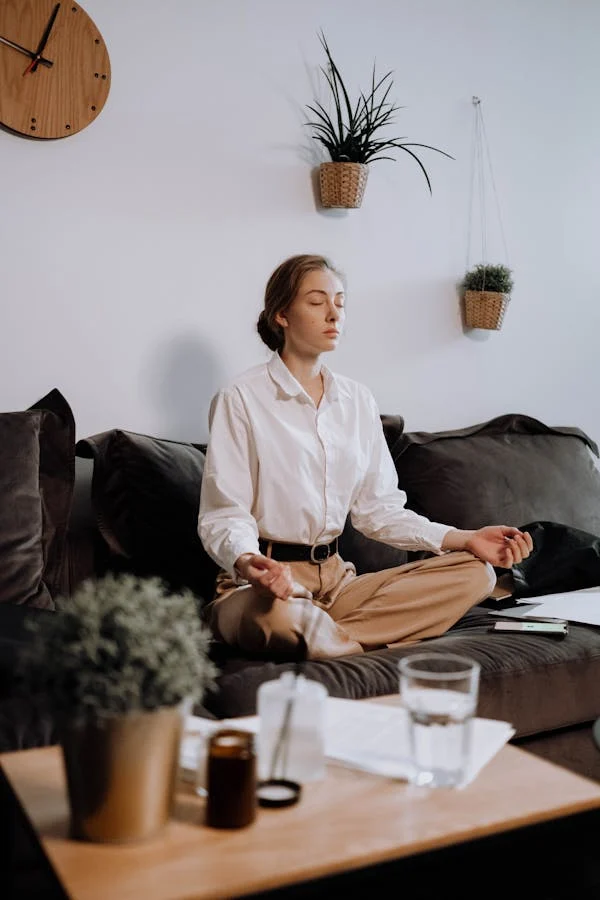
First, find a spot. Nothing fancy. A chair in your kitchen, the edge of your bed, the couch before everyone else wakes up. Just somewhere you can sit without being interrupted for a few minutes. That’s good enough.
Next, get comfortable. Sit how your body wants to sit. Feet on the floor, legs crossed, back against a chair—whatever feels okay. You don’t have to sit perfectly straight. If you’re comfortable, you’re doing it right.
Then, set a timer for five minutes. Not ten. Not twenty. Five. Short enough that your brain can’t argue with it. This is important. Five minutes feels doable, even on busy or tired days.
Now, close your eyes—or keep them softly open if that feels better. Take a breath in. Then let it out. No special technique. No counting. Just notice the feeling of breathing. Air coming in. Air going out.
Your mind will wander. That’s normal. You’ll think about messages, plans, random memories, or absolutely nothing at all. When you notice you’re thinking, don’t get annoyed. Just notice it. Then gently bring your attention back to your breath.
Imagine thoughts like clouds passing through the sky. You see them, but you don’t chase them. You don’t push them away either. You just let them drift by.
That’s it. Really.
When the timer ends, open your eyes. Take one more breath. You showed up. That counts. Do this once a day if you can. If you miss a day, no drama—just come back the next time.
Meditation isn’t about being calm all the time. It’s about learning how to pause, even for a moment. And that moment is enough.
Want to Go a Bit Deeper? Here’s Some TCM Flavor
- Morning = energy boost. Try meditating after you wake up. Helps you start grounded.
- Evening = wind-down. Do it before bed to quiet your mind and sleep better.
Pair it with a good meal, some fresh air, and enough sleep, and you’re already doing way more than most people.
Little Techniques That Actually Work
- Breathing: Just feel it in your nose. No need to count or control—just notice.
- Listening: Tune in to the sounds around you. Don’t react, just hear.
- Visualizing energy: Picture light moving through your body. Sounds silly, but weirdly effective.
Real Talk: You Can’t Be Bad at Meditation
You’re not trying to win at this. No one gets a trophy for “most Zen.”
All you’re doing is creating space. A little pause. A reset button for your overworked brain.
It’s tiny, but it’s powerful.
And if you give it a shot? You might feel better than you have in a while.
Real-Life FAQs
1. Do I need to do it daily?
No pressure, but yeah—it helps. Five minutes a day is better than nothing at all.
2. Can I meditate lying down?
Sure. Just be warned: nap zone is real. But hey, if you fall asleep, maybe that’s what you needed.
3. What if I do fall asleep?
Cool. Try meditating earlier in the day next time if you want to stay awake.
4. Can this replace therapy?
Nope. But it can make therapy work even better. It’s a great sidekick.
5. How soon will I feel something?
Some people feel a shift after the first session. For others, it takes a couple weeks. There’s no timeline—just keep showing up.
Must-Read Books
One informative resource is: “Practicing Mindfulness: 75 Essential Meditations to Reduce Stress, Improve Mental Health, and Find Peace in the Everyday”
👉 [See this book on Amazon paperback][Kindle]
Another helpful resource is: “The Meditation Book: The Essential Meditation for Beginners to Find Peace, Reduce Stress, and Improve Mental Health“
👉 [Check the price on Amazon paperback][Kindle]
Sharing the wisdom of Traditional Chinese Medicine is our passion and calling.
If these words resonate with you, and you’d like to help me keep creating, consider offering a symbolic cup of green tea or support through Ko-fi.
Your kindness nurtures this work — like qi flows through the meridians
These articles may interest you:
THE ACUPRESSURE ROUTINE FOR WINTER AND SPRING ENERGY
TCM TIPS FOR EMOTIONAL WELLBEING AND MOOD SUPPORT
BEST NATURAL TCM HEALING TIPS FOR ALCOHOL ADDICTION
Newsletter o zdrowiu z TCM
Wyrusz w podróż po mądrość Tradycyjnej Medycyny Chińskiej.
Dołącz do newslettera i co tydzień otrzymuj porady oraz nowe artykuły prosto na swoją skrzynkę.
TCM Health Newsletter
Embark on a journey into the wisdom of Traditional Chinese Medicine.
Join the newsletter and receive weekly tips and new articles delivered straight to your inbox.