

Dr. Tomasz Borecki is a specialist in Traditional Chinese Medicine (TCM) with over 25 years of experience. He was educated in China, where he developed his expertise in Eastern medicine. He actively promotes TCM in Poland and internationally. More information can be found in the “About Us” section.
Acupressure Practical Guide
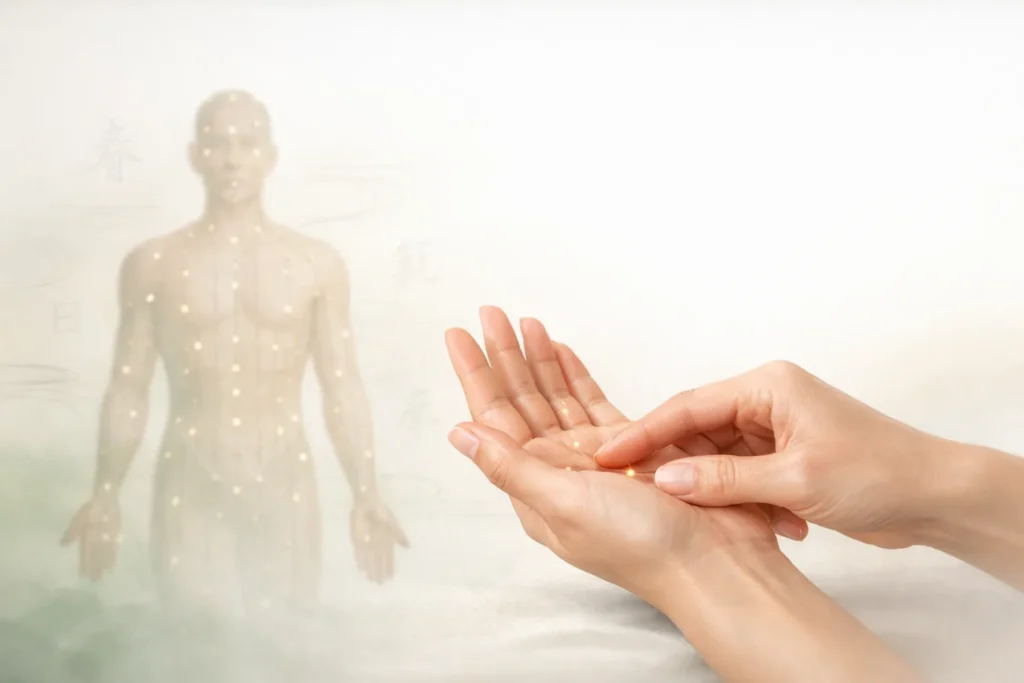
Acupressure Explained: The Simple Daily Practice That Helps Your Body Find Balance
Acupressure might sound mysterious at first, but once you try it, it feels surprisingly familiar. It’s one of those practices that makes you think, “Why didn’t I start this earlier?” No needles. No complicated equipment. Just your hands, a bit of curiosity, and a few quiet minutes for yourself.
Rooted in Traditional Chinese Medicine (TCM), acupressure has been used for centuries to support balance in the body and mind. Today, it’s gaining attention again—mostly because people are tired of complex routines and want something simple, grounding, and practical. And that’s exactly what acupressure offers.
Let’s break it down, step by step, in a way that actually makes sense and makes you want to keep reading.
What Is Acupressure? A Gentle Introduction
At its core, acupressure is the practice of applying gentle, focused pressure to specific points on the body. These points are known as acupressure points and are located along pathways called meridians.
Think of it like this: your body is full of switches. Most of the time, you don’t even notice them. But when you press the right one, something shifts—tension eases, your breath deepens, and your mind slows down.
Unlike acupuncture, acupressure doesn’t use needles. That’s why it’s so accessible. Anyone can learn it. You can practice it at home, at work, or even while waiting in line.
Why Acupressure Feels So Natural
Have you ever rubbed your temples when you were overwhelmed? Or pressed your neck after a long day? That’s instinctive acupressure.
Your body already knows where it needs attention. Acupressure simply gives that instinct a clear map and a bit of structure. It’s not about forcing anything—it’s about listening.
Acupressure vs Acupuncture: What’s the Difference?
Both methods come from the same roots in TCM and work with the same points and meridians. The key difference is the tool.
- Acupuncture uses fine needles and is performed by trained professionals.
- Acupressure uses fingers, hands, or simple tools and can be practiced on your own.
If acupuncture is like tuning a piano with professional tools, acupressure is like adjusting the strings gently by hand. Different approach, same goal: harmony. Read more:
BEFORE YOU TRY ACUPUNCTURE: WHAT NO ONE TELLS YOU
Acupressure in Traditional Chinese Medicine (TCM)
To really understand acupressure, it helps to understand a few basic ideas from TCM. Don’t worry—this isn’t abstract philosophy. It’s surprisingly practical.
In Traditional Chinese Medicine, the human body is seen as a network of energy pathways called meridians, through which vital energy (Qi) flows. When this energy moves freely, we tend to feel balanced, calm, and healthy. But when it gets blocked or weakened—due to stress, poor lifestyle habits, or emotional strain—discomfort and various symptoms can appear.
Acupressure works by gently stimulating specific points along these meridians using fingers, palms, or light pressure. The idea is not to force anything, but to encourage the body to return to balance naturally. Think of it like clearing a gently clogged stream—once the flow returns, things start to settle on their own.
What makes acupressure especially appealing today is its simplicity. You don’t need special equipment, and you can practice it almost anywhere. Many people use it to reduce tension, support relaxation, improve sleep, or simply reconnect with their body in a more mindful way. It’s a small practice, but over time it can become a powerful tool for daily well-being.
Qi: The Energy That Keeps Everything Moving
Qi (pronounced “chee”) is often described as life energy. In simple terms, it’s the movement behind everything your body does.
When Qi flows smoothly, you feel balanced and steady. When it slows down or gets blocked, you might feel heavy, tense, or drained. Acupressure helps encourage that flow—like clearing leaves from a stream.
Yin and Yang: Finding the Middle Ground
Yin and yang are opposites that depend on each other. Rest and activity. Calm and movement. Night and day.
Acupressure doesn’t push you to one extreme. Instead, it helps you find the middle ground where things feel just right.
Meridians: Your Body’s Inner Highway System
Meridians are pathways where Qi moves through the body. There are 12 main meridians, each connected to different organs and functions.
You don’t need to memorize them all. Just know this: when you press a point, you’re not working on one tiny spot—you’re influencing an entire pathway.
A Short History of Acupressure
Ancient Texts and Everyday Practice
🔴 | Acupressure predates acupuncture. Long before metal needles existed, people relied on something simple and always available — their hands. Touch was the first tool, the most natural way to respond to pain, tension, or imbalance.
🔴 | References to these practices appear in classical texts like the Huangdi Neijing, written thousands of years ago. These writings didn’t just describe illness — they explored the connection between the body, energy, and the natural rhythms of life.
🔴 | But acupressure was never only for scholars, physicians, or trained healers. It lived much closer to everyday life. It was something people shared quietly and naturally — passed from parent to child, neighbor to neighbor, generation to generation.
🔴 | A sore shoulder, a headache, fatigue — these were not always reasons to seek distant help. Instead, people used what they knew. A press here, a gentle hold there. Small actions, repeated over time, building a deep, intuitive understanding of the body.
🔴 | In that way, acupressure was never just a technique. It was part of a way of living — simple, accessible, and rooted in attention.
How Acupressure Is Used in Modern China
During my time studying in China, I was amazed at how naturally acupressure fit into people’s everyday lives. It wasn’t just something for clinics or traditional healers—it was everywhere. I remember walking through bustling streets and spotting small booths or even simple mats on the ground where people would sit and press a few points on their arms, hands, or feet. In parks, older folks gathered in circles, chatting casually while giving each other short, gentle acupressure sessions. There was laughter, light teasing, and a sense that this wasn’t a medical treatment—it was just part of life.
What struck me most was how effortless it seemed. People didn’t need appointments, and no one expected dramatic results. It was more like a daily tune-up. I even saw office workers step outside during lunch breaks to press points on their hands or legs for 10 minutes. They’d return to their desks feeling refreshed, like they’d just stretched or had a mini-break.
The beauty of acupressure in modern China is that it’s both communal and personal. Children learn the basics at school, elders practice it in parks, and everyone has their little rituals at home. It’s woven into the rhythm of life so seamlessly that it hardly feels like “health work”—it’s more like a gentle pause, a way to check in with your body and energy. Observing this everyday practice gave me a new perspective: taking care of yourself doesn’t have to be complicated. Sometimes, it’s as simple as pressing a few points and taking a few slow breaths.
How Acupressure Works in Everyday Life
Why Gentle Pressure Is Enough
This is one of the biggest surprises for beginners: more force doesn’t mean better results.
Acupressure works best with steady, comfortable pressure. You’re inviting the body to respond, not trying to overpower it.
Listening to Your Body Instead of Fighting It
Think about how often you ignore small signals from your body during the day. A stiff neck after hours at a desk. Tired eyes from staring at screens. A tension headache that slowly builds in the background. Most of us push through these discomforts until they become impossible to ignore.
Acupressure encourages a different approach.
Instead of waiting for stress or tension to become overwhelming, you can use a few minutes of gentle pressure to check in with your body and support its natural balance. Many people find that this simple habit helps them feel more relaxed, focused, and connected to how they’re feeling throughout the day.
The beauty of acupressure is that it doesn’t require special equipment or a complicated routine. You can practice it while sitting at your desk, relaxing on the couch, or even during a short break between meetings. A few mindful moments can become a practical tool for managing everyday stress.
What makes acupressure especially appealing is its simplicity. You’re not trying to force a result. You’re creating the right conditions for your body to do what it already knows how to do—release tension, improve circulation, and promote a greater sense of comfort.
Sometimes the smallest actions, repeated consistently, can make the biggest difference in how you feel each day.
The Role of Breath and Attention
Your breath is half the technique. Slow, deep breathing helps your nervous system settle and allows the body to respond more clearly.
When you combine pressure with attention, the effect deepens. It’s not just physical—it’s a moment of awareness.
Preparing for an Acupressure Session
Space, Posture, and Mindset
One of the best things about acupressure is that it doesn’t require a fancy setup. You don’t need a special mat, an expensive chair, or even silence—though quiet helps. All you really need is a spot where you can sit or lie down comfortably for a few minutes without being interrupted. It could be your bed, a cozy chair, or even a corner of the living room.
Posture matters, but it doesn’t have to be perfect. Sit with your back straight but relaxed, or lie on your back with your arms resting loosely by your sides. The goal is comfort, not stiffness. Before you touch a single point, take a moment to breathe deeply. Inhale slowly through your nose, let your chest and belly expand, and exhale gently. Feel your shoulders drop and your muscles soften. That’s your cue that your body is ready to respond, and your mind is present. It’s a little like telling your body, “Hey, it’s our time now.”
Check out our guide : Complete TCM Diet Guide for Beginners
How Long Should a Session Last?
You don’t need to dedicate an hour to feel benefits. Even five minutes of focused acupressure can make a noticeable difference in how you feel. Many people find that 10–15 minutes hits the sweet spot—a short enough break that it fits into a busy day, but long enough for your body to respond.
Here’s the key: consistency beats intensity. Doing a few minutes every day will have far more effect than one long session a month. Think of it like watering a plant—you don’t soak it once and walk away. Small, steady attention makes growth happen..
Meridians and Energy Points Made Simple
The 12 Main Meridians
Each meridian relates to specific functions in the body. For example:
- Stomach meridian → energy and digestion
- Heart meridian → emotional balance
- Kidney meridian → vitality and grounding
Why Points Matter More Than Muscles
Muscles respond to massage. Points respond to intention and pressure. That’s why acupressure can feel subtle yet deep at the same time.
Everyday Uses of Acupressure
Relaxation and Mental Calm
Points like Neiguan (PC6) and Shen men are often used to support calm and clarity. Just a few minutes can help your thoughts slow down.
Discover more in the article about: SHEN MEN: YOUR STRESS RESET POINT or BEST ACUPRESSURE POINTS FOR MANAGING NAUSEA NATURALLY
Better Sleep Habits
Evening acupressure can become a bedtime ritual. It signals to the body that it’s time to wind down.
Read more:
TOP CHINESE HERBS FOR INSOMNIA: NATURAL WAYS TO SLEEP BETTER
Daily Energy and Focus
Points such as Zusanli (ST36) are known for supporting steady energy throughout the day—without that jittery feeling.
Read more in the article about: ZUSANLI POINT: ENERGY WITHOUT COFFEE and
BRAIN FOG AND POOR CONCENTRATION? HERE’S WHAT TCM SAYS
Muscle Tension and Desk Fatigue
Neck, shoulders, hands, and feet respond especially well to acupressure after long hours at a desk.
Explore further in the article about: TCM’S SECRET POINT THAT UNLOCKS A STIFF NECK
Find more in the links below the article
The Most Important Acupressure Points
Head and Face Points
- Yintang – between the eyebrows, linked with calm and focus
- Taiyang – at the temples, often used for facial relaxation
Hands and Arms
- Hegu (LI4) – between thumb and index finger, widely used in daily practice
- Neiguan (PC6) – inner forearm, connected with emotional balance
Legs and Feet
- Zusanli (ST36) – below the knee, associated with overall vitality
- Taixi (KI3) – near the ankle, linked with grounding energy
Acupressure Techniques That Actually Work
Acupressure isn’t just about pressing randomly on your body—it’s about using the right technique so your energy points can respond and your body feels the benefit. The good news? You don’t need to be a professional or have fancy equipment. Even your hands can do the job if you know how.
Circular Pressure
Circular pressure is one of the simplest and most effective techniques. You place your finger or thumb on a point and make small, slow circles. Imagine you’re gently stirring a cup of tea—steady, calm, and controlled. The movement helps “wake up” the point and spreads energy around the surrounding area. You’ll often notice a subtle warmth or tingling, a signal that the point is responding. The beauty of circular pressure is that it’s easy to do anywhere—on a bus, at your desk, or before bed.
Pulsing Pressure
Pulsing pressure is like giving a point a gentle nudge, then releasing, then nudging again in a steady rhythm. Think of it as a soft drumbeat for your body’s energy. This technique is particularly useful if you feel tension or fatigue in a specific spot. The repeated pressure stimulates the point and helps the Qi (energy) move more freely, leaving you feeling lighter and more alert.
Watch an example of how to massage on our YouTube channel here.
Using Simple Tools
While your fingers are enough for most points, sometimes a small wooden stick, a rounded metal tool, or a specialized acupressure pen can help. These tools are especially handy for hard-to-reach areas like your back, shoulders, or the soles of your feet. They let you apply steady, precise pressure without straining your hands.
The key with all techniques? Gentle, consistent, and mindful pressure. Think of it as having a quiet conversation with your body—no force, just attention and care.
Qi Flow: Why Energy Balance Matters
What Happens When Qi Gets Stuck
When energy doesn’t move freely, things feel off. Heavy. Sluggish. Tight.
How Regular Practice Supports Flow
Acupressure is like routine maintenance. You don’t wait for something to break—you keep things moving smoothly.
Real-Life Experiences from China
Street Clinics and Daily Rituals
One of the most fascinating things I noticed during my time in China was how seamlessly acupressure was woven into everyday life. On almost every street corner, in small clinics tucked between shops, or even in parks, people were practicing it casually. I remember watching someone walk up to a small bench, sit down, and spend 10 minutes pressing a few key points on their arms and legs. Afterward, they simply got up and continued with their day, moving a little lighter and more relaxed, as if they had just taken a short walk or stretched. There was no fuss, no long explanation, and no pressure to “fix” anything. It was simply maintenance—like brushing your teeth or having a morning coffee.
What struck me most was the rhythm of it. People treated it as a small, regular pause in their day. There were no labels or medical jargon, just a practical habit that supported energy and calmness. Watching this made me realize how powerful simplicity can be—the tiniest ritual, done consistently, can become a cornerstone of well-being.
Learning Acupressure at School
Another eye-opening experience was seeing children learn the basics of acupressure at school. Health education included simple points and gentle techniques, so kids grew up understanding how to care for their bodies and energy. Imagine starting your day learning not just math or reading, but also how to relieve tension, improve focus, and calm your mind—skills that most adults in the West struggle to pick up later in life.
It made me think: what if everyone learned these simple practices early on? Self-care wouldn’t feel like a chore; it would just be part of living. Seeing this in action reinforced how acupressure is less about treatment and more about integrating small, intentional pauses into daily life..
Two Real-World Practice Stories
From my own experience working with patients in Traditional Chinese Medicine, I’ve seen how small, consistent acupressure routines can make a surprising difference in daily life. Here are two examples from my practice that really illustrate the point:
- A woman in her 40s – easing evening tension
She came to me feeling constantly rushed after work. Her evenings were a blur of chores, emails, and responsibilities, leaving her tense and unable to relax. We started with a simple routine: gentle acupressure on the Neiguan (PC6) point on her inner forearm and a few minutes on Yintang, the “third eye” point between the eyebrows. She did this for about 10 minutes each evening. Within a few weeks, she noticed a shift—her evenings felt calmer, her mind was less cluttered, and even small chores became easier to tackle. The change wasn’t dramatic overnight, but it was steady and noticeable. - A young professional – boosting afternoon energy
Another patient, a 30-year-old office worker, struggled with energy crashes in the middle of his day. We introduced a quick lunchtime routine using Zusanli (ST36) below the knee and Hegu (LI4) on the hand. Just five minutes pressing these points during lunch was enough to change his afternoons. He reported feeling steadier, more focused, and less reliant on coffee to keep him going. Over time, this small adjustment became a natural habit that supported his overall energy and concentration.
The takeaway: Small, intentional actions—just a few minutes a day—can create noticeable, practical improvements. Acupressure isn’t about a big overhaul; it’s about consistent, mindful care that fits into real life.
ACUPRESSURE FOR BEGINNERS: 3 MUST-READ BOOKS TO MASTER HEALING NATURALLY
Science, Curiosity, and Modern Research
When you look at acupressure through the lens of modern science, what’s fascinating isn’t just whether it might help, but how researchers are beginning to measure its effects with real clinical studies instead of assumptions. While acupressure has long roots in tradition, there’s now growing interest from medical scientists to understand how gentle pressure on specific points affects circulation, nervous system responses, sleep patterns, mood, and quality of life.
For example, a randomized controlled study examined the effect of acupressure on stress levels in nursing students during their clinical practice. In this trial, students who received regular acupressure on points like HT7 and Yintang (EX‑HN3) showed a significant reduction in measured stress scores after repeated sessions compared with before the intervention, suggesting that acupressure helped lower stress levels in a real educational setting. You can read the full study here: https://pubmed.ncbi.nlm.nih.gov/35770564/
Another area where research has accumulated is sleep quality and life comfort. A large systematic review and meta‑analysis of 27 studies involving more than 2,000 people undergoing hemodialysis found that acupressure was associated with improved sleep quality and better overall quality of life compared to a waiting‑list control group. This research shows that acupressure could have broader effects beyond just subjective relaxation: it can correlate with measurable changes in standardized health outcomes. See the details here: https://pubmed.ncbi.nlm.nih.gov/41531662/
It’s important to note that research in this field is still evolving—study quality varies, and scientists continue to explore exactly how and why acupressure influences the body’s internal balance. But what’s truly compelling is how ancient knowledge and modern inquiry are starting to overlap: careful observation from centuries ago is now being tested with today’s scientific tools. The result? A growing body of evidence that slow, mindful pressure on the body may affect not only how you feel but also measurable aspects of your physiology.
Common Beginner Mistakes to Avoid
- Pressing too hard
- Skipping breath awareness
- Being inconsistent
- Expecting instant results
Acupressure rewards patience.
How to Add Acupressure to a Busy Life
One of the best things about acupressure is that it doesn’t need to take over your schedule. You don’t have to carve out an hour or make it feel like a chore—it’s all about small, intentional pauses that fit into the rhythm of your day.
Start with 5 Minutes a Day
Even just five minutes of focused acupressure can make a noticeable difference. Pick a couple of points that feel relevant—like Neiguan (PC6) for calm or Zusanli (ST36) for energy—and press gently. Think of it like stretching your body, but with your hands guiding the energy.
Pair It with Breathing
Your body responds better when your mind is present. Combine acupressure with slow, deep breaths. Inhale, feel the point activate, exhale, and release tension. This pairing not only enhances the effect of the pressure but also introduces a small moment of mindfulness into your day.
Keep Notes on What Feels Good
Everyone’s body is different, and points can affect people in slightly different ways. Keep a simple notebook or app log of which points you tried, how long, and what you felt afterward. Over time, you’ll see patterns and discover the spots and techniques that really work for you.
Stay Curious
Acupressure isn’t about forcing results. It’s about exploring your body, noticing subtle changes, and experimenting with what feels best. Approach it like a mini-adventure or a gentle check-in with yourself.
Remember, it’s not another task on your to-do list—it’s a pause, a tiny reset, and a way to care for yourself in the middle of a busy life. Those few minutes can leave you feeling lighter, calmer, and more connected to your energy.
Conclusion: A Small Practice with a Big Impact
Acupressure isn’t about “fixing” anything—it’s not a quick patch or a miracle cure. It’s about reconnecting: with your body, your breath, and the natural rhythm of your day. Think of it as checking in with yourself, a gentle conversation that says, “Hey, I see you. I’m here with you.”
Imagine your body as a finely tuned instrument. Even the smallest adjustments—a little pressure here, a few minutes there—can completely change the way it feels and moves. Tuning doesn’t happen all at once; it’s the daily, mindful practice that creates harmony. Over time, acupressure stops feeling like a “technique” and becomes a quiet, restorative ritual—a moment to pause, breathe, and notice subtle shifts in your energy.
What’s magical is how quickly the mind picks up on it. When you start listening to your body and observing what points bring calm, focus, or energy, it becomes almost addictive in the best way. Those few minutes you spend each day start to ripple through your life—you notice better focus at work, calmer evenings at home, and a lighter, more energized sense of self.
Acupressure is simple, accessible, and profoundly personal. You don’t need special tools or a clinic. You just need curiosity, attention, and a willingness to explore. Start small, be consistent, and watch how this tiny practice quietly transforms your day—one gentle press at a time.
FAQs: Most Common Questions About Acupressure
Q1: Does acupressure hurt?
No. You may feel pressure, warmth, or tingling, but it should feel comfortable.
Q2: How often can I practice acupressure?
Once or twice a day is more than enough.
Q3: Do I need special tools?
No. Your hands are enough.
Q4: Can beginners learn acupressure on their own?
Absolutely. Start simple and build gradually.
Q5: How long before I notice changes?
Many people notice subtle shifts within days or weeks, especially with regular practice.
Find more in the links below the article
Must-Read Books
One informative resource is: “Acupressure’s Potent Points: A Guide to Self-Care for Common Ailments”
👉 [See this book on Amazon paperback][Kindle]
and: “The Acupressure Bible: The Complete Self-Treatment Guide to Relieve Pain, Reduce Anxiety & Restore Energy — Your Natural Healing Companion for the Demands of Modern Life’“
👉 [Check the price on Amazon paperback][Kindle]
Acupressure Pen-Helps you apply the perfect amount of pressure with minimal effort to get a deep trigger point massage
👉 [See this book on Amazon ]
Use promo code TCMHEAL5 at checkout to enjoy an exclusive 5% discount—available only at Arcane Herbs Shop.
At Arcane Herbs Shop in Chicago’s Chinatown, every formula is carefully prepared using traditional methods and natural ingredients. Here, you’ll also find handcrafted herbal formulas made with care. You can browse and order our selections online- [here].
Sharing the wisdom of Traditional Chinese Medicine is our passion and calling.
If these words resonate with you, and you’d like to help me keep creating, consider offering a symbolic cup of green tea or support through Ko-fi.
Your kindness nurtures this work — like qi flows through the meridians
Here you’ll find links to articles that explain acupressure points and how to use them. Check back often — the list is regularly updated with new content
COMPLETE TCM DIET GUIDE FOR BEGINNERS
THE BETTER SLEEP & STRESS RELIEF GUIDE
DIABETES CARE WITH TCM: 5 NATURAL AND EFFECTIVE APPROACHES
ANCIENT CHINESE REMEDIES FOR MIGRAINES THAT ARE STILL USED TODAY
STOP HEMORRHOIDS NATURALLY: PROVEN CHINESE MEDICINE GUIDE
HOLIDAY DIGESTIVE PROBLEMS? 3 SIMPLE TCM TIPS THAT ACTUALLY WORK
HOW TO LOWER CORTISOL NATURALLY WITH TRADITIONAL CHINESE MEDICINE
TOP CHINESE HERBS FOR INSOMNIA: NATURAL WAYS TO SLEEP BETTER
HOW TO RELIEVE TOOTH AND JAW PAIN WITH ACUPRESSURE (STEP-BY-STEP GUIDE)
LYME DISEASE: THE CURE MIGHT BE OLDER THAN YOU THINK!
3 PROVEN ACUPRESSURE POINTS FOR DIGESTIVE PROBLEMS
LOW BLOOD PRESSURE COULD BE DRAINING YOUR LIFE – HERE’S THE NATURAL FIX
INSOMNIA ISN’T JUST IN YOUR HEAD – HERE’S THE TCM PERSPECTIVE
TRADITIONAL CHINESE MEDICINE FOR EAR PAIN – SIMPLE HOME GUIDE
STOP BLAMING POLLEN! THE REAL REASON YOU HAVE ALLERGIES
ACUPRESSURE FOR BEGINNERS: 3 MUST-READ BOOKS TO MASTER HEALING NATURALLY
THIS ANCIENT REMEDY MAY HELP FIX YOUR THYROID
CHINESE MASSAGE AT HOME: A SKILL YOU CAN LEARN YOURSELF
BRAIN FOG AND POOR CONCENTRATION? HERE’S WHAT TCM SAYS
BEFORE YOU TRY ACUPUNCTURE: WHAT NO ONE TELLS YOU
STOP BLAMING YOUR STOMACH! THE REAL CAUSE OF REFLUX
BEYOND CALORIES: UNVEILING THE HIDDEN ROOTS OF OBESITY THROUGH TCM
THIS ONE POINT ON YOUR FOOT SUPPORTS KIDNEY STRENGTH
YOUR SWEAT PROBLEM COULD BE A SIGN – TCM KNOWS WHY!
ACUPRESSURE FOR WOMEN: SIMPLE POINTS FOR NATURAL BEAUTY
TCM’S SIMPLE SECRET TO A SMOOTH MENOPAUSE
THE ANCIENT HEALING METHOD YOU NEED TO COMBAT STRESS AND ANXIETY
LAO GONG ACUPRESSURE: A SIMPLE WAY TO RELEASE EMOTIONAL STRESS
THIS ANCIENT TOOL IS THE SECRET TO GLOWING SKIN!
THE TRUTH BEHIND POPULAR ACUPRESSURE MYTHS
BEST ACUPRESSURE POINTS FOR MANAGING NAUSEA NATURALLY
ACUPRESSURE FOR CONSTIPATION – A PRACTICAL TCM GUIDE
THE ACUPRESSURE ROUTINE FOR WINTER AND SPRING ENERGY
THIS POINT MAKES YOUR SHOULDER MOVE BETTER
TCM’S SECRET POINT THAT UNLOCKS A STIFF NECK
SHEN MEN: YOUR STRESS RESET POINT
ZUSANLI POINT: ENERGY WITHOUT COFFEE
STRUGGLING WITH KNEE PAIN?HERE’S WHAT REALLY HELPS
STUFFY SINUSES? DISCOVER HOW TCM HERBS CAN BRING YOU RELIEF
WHY YOUR COUGH WON’T GO AWAY – TCM TIPS
HOW TO EFFECTIVELY DETOXIFY YOUR LIVER? 7 BEST METHODS ACCORDING TO TCM