Hepatitis B: East Meets West in Liver Care

East Meets West – A New Way to Look at Hepatitis B
When you hear “Hepatitis B,” most people immediately think in numbers: lab results, enzyme levels, viral markers, charts that rise and fall. That’s the language of Western medicine—precise, measurable, necessary. But there’s another way to look at the same situation, one that doesn’t replace science but adds depth to it.
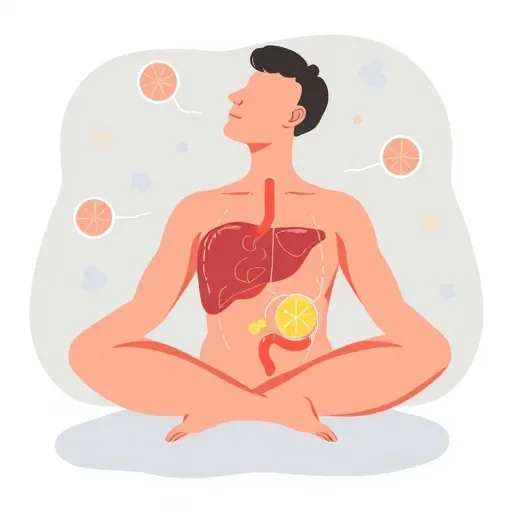
Traditional Chinese Medicine (TCM) speaks a different dialect. It doesn’t argue with blood tests. Instead, it asks a quieter question: how is the body coping as a whole? When you combine both perspectives, something interesting happens—you stop seeing the liver as just an organ and start seeing it as part of a living system that responds to food, stress, emotions, and rhythm.
Two Medical Worlds, One Liver
How Western Medicine Describes Hepatitis B
From a Western point of view, Hepatitis B is about a virus interacting with liver cells. Doctors monitor inflammation, enzyme activity, metabolism, and long-term structural changes. This approach is grounded in research, imaging, and lab diagnostics—and it’s essential.
But for many people, numbers don’t tell the whole story. Fatigue, tension, digestive discomfort, mood swings—these often appear long before or alongside abnormal results.
The TCM Perspective – Beyond Organs and Labels
TCM doesn’t start with the virus name. It starts with patterns. Instead of asking “What is the diagnosis?” it asks “What kind of imbalance is showing up?” The liver, in this system, is less about anatomy and more about flow—of energy, blood, and emotions.
The Liver in Traditional Chinese Medicine
The Liver as the Flow Manager
In TCM, the liver’s main job is to keep things moving smoothly. Think of it like traffic control. When everything flows, life feels easy. When it doesn’t, congestion builds up—physically and emotionally.
Qi, Emotions, and Inner Balance
Qi is often described as vital energy, but a better metaphor might be momentum. The liver helps maintain that momentum. Anger, frustration, long-term stress—these are said to slow or block it. And when Qi stalls, the body feels it.
Why Stagnation Matters
Stagnation is one of the most common patterns seen alongside chronic liver load. It doesn’t mean something dramatic—it can show up as tight shoulders, irritability, bloating, or that feeling of being constantly “wound up.”
Common TCM Patterns Seen in Hepatitis B
Liver Qi Stagnation
This is the classic one. Emotional pressure, unexpressed stress, constant deadlines—it all piles up. Over time, the liver gets tense, like a muscle that never relaxes.
Dampness and Heat Accumulation
In TCM language, “dampness” refers to heaviness and sluggishness, while “heat” points to internal irritation. Together, they describe a system that feels overloaded and overheated.
Weak Digestive Center (Spleen Qi)
Digestion in TCM is run by the Spleen system. When meals are irregular or overly complex, digestion weakens, creating more internal burden—something the liver really doesn’t appreciate.
Emotional Overload and Lifestyle Factors
TCM doesn’t separate mind and body. Long-term emotional tension is seen as a physical influence, especially for the liver.
Food as Daily Support, Not Punishment
Why Warm and Simple Meals Matter
TCM kitchens aren’t about extremes. Warm, cooked meals are easier to process. They don’t shock the system. Think soups, lightly steamed vegetables, grains—food that feels comforting rather than demanding.
Regularity Over Perfection
Skipping meals, eating late at night, or constant snacking keeps the system guessing. Regular meal times create predictability, and predictability calms the liver.
Three Everyday Foods That Fit the TCM Logic
Green Leafy Vegetables
Green is the liver’s color in TCM symbolism. Leafy greens are light, flexible, and supportive of smooth flow. Gently cooked is usually better than raw.
Millet – The Quiet Hero
Millet doesn’t get much attention, but in TCM it’s prized for its simplicity. It’s neutral, drying, and supportive of digestion—perfect for mornings.
Mung Beans and Cooling Traditions
Mung beans have been used for generations in China, often as simple soups. They’re associated with clearing internal heat without being harsh.
Herbal Traditions for supporting liver health
When people talk about liver enzymes, they’re usually referring to numbers on a lab report—ALT, AST, sometimes ALP or GGT. But behind those numbers is a simple story: liver enzymes tend to rise when the liver is under pressure. In conditions like hepatitis B, this pressure can come and go, which is why enzyme levels often fluctuate rather than stay perfectly stable.
From a traditional perspective, herbs like Wu Wei Zi are often described as helping the body “hold steady” during long-term strain. In everyday language, this can be compared to supporting resilience when liver enzymes are easily triggered by stress, fatigue, or virus. The idea isn’t about forcing numbers down, but about helping the system cope more calmly so it doesn’t overreact.
Gan Cao, the harmonizer, fits nicely into this picture as well. When liver enzymes are elevated, everything can feel a bit inflamed or tense. Gan Cao’s traditional role is to soften and balance—almost like turning down the volume. It’s not aggressive; it’s about smoothing the overall response so the body isn’t constantly pushed into extremes.
Cooling herbs such as Ban Lan Gen or Hu Zhang appear in classical texts when “heat” is present. Today, many people intuitively connect this idea of heat with inflammation or irritation reflected in raised liver enzymes. Cooling, in this sense, means calming rather than suppressing—creating conditions where the liver doesn’t feel under constant attack.
Finally, Chai Hu Shu Gan is often associated with movement and release. When liver enzymes rise, stress and emotional tension are frequently part of the picture. This formula is traditionally linked with helping things circulate again—physically and emotionally. In simple terms, it’s about easing pressure so the liver isn’t stuck carrying everything alone.
Altogether, these ideas frame liver enzymes not just as numbers to fear, but as signals. The focus becomes listening, calming, and supporting balance over time, especially in long-term conditions like hepatitis B.
Acupressure in Relation to Liver Function and Hepatitis B
When living with chronic hepatitis B (WZW B), the liver often works under long-term pressure. Alongside regular medical care and monitoring, some people choose gentle daily practices to support relaxation and body awareness. In Traditional Chinese Medicine, the liver is linked with smooth internal flow—both physical and emotional. Acupressure is commonly used as a calm, supportive ritual rather than a treatment.
Zu San Li (ST36) – Supporting the Body Under Liver Strain
Zu San Li is traditionally associated with overall strength and resilience, which can be especially important when the liver has been under ongoing stress. While it doesn’t target the liver directly, it is often used to support the whole system, helping the body adapt more smoothly to long-term conditions like hepatitis B.
Location:
ST36 is located on the lower leg. Measure about four finger-widths below the kneecap, then move one finger-width outward from the shin bone. The point often feels slightly sensitive when pressed.
👉 To see exactly how to locate and massage ST36, watch our clear, step-by-step demonstration on our YouTube channel– HERE
Tai Chong (LR3) – Easing Liver-Related Tension
Tai Chong is closely linked with liver Qi flow in TCM. Emotional tension, stress, and frustration—common experiences for people living with WZW B—are traditionally associated with liver imbalance. Gentle stimulation of LR3 is often used to encourage release and smooth internal movement.
Location:
LR3 is found on the top of the foot, in the soft space between the big toe and second toe. Slide your finger upward until you feel a natural hollow before the bones meet.
👉 We show exactly how to massage LR3 safely and gently on our YouTube channel—take a look HERE
Gentle, Consistent Practice for Liver Support
In TCM, regular, calm practice matters more than strong pressure. A few minutes daily can help reduce tension and build a sense of cooperation with your body, especially when living with a chronic liver condition.
👉 For a simple daily acupressure routine focused on liver support, visit our YouTube channel and practice along with us –HERE
This content is for educational purposes and does not replace medical care.
Two Stories from TCM Practice
Case One – The Stressed Office Worker
A 42-year-old man( Hepatitis B) with a desk job and constant pressure showed signs of liver Qi stagnation and dampness. After simplifying evening meals, introducing warming foods, and adding daily acupressure and chai hu shu gan wan, he reported better sleep and lighter digestion within months.
Case Two – The Perfectionist Lifestyle
A woman in her late 30s( Hepatitis B), highly driven and irregular with meals, experienced fatigue and tension. Focusing on routine, gentler food choices, and emotional decompression( chai hu shu gan wan plus wu wei zi) helped her feel more stable and grounded over time.
Lessons from China – Clinics and Street Wisdom
In Beijing clinics, patients often carry thermoses—not with coffee, but warm herbal drinks sipped slowly. On the streets of Hangzhou, a tofu vendor once joked, “Anger ruins business—and the liver.” Simple wisdom, surprisingly accurate.
Interesting TCM Facts About the Liver
Planning, Flexibility, and Creativity
Classical texts describe the liver as responsible for planning and adaptability. People with strong liver energy are often creative—but also prone to tension.
Ancient Insights, Modern Observations
Modern lifestyle research increasingly links stress, diet, and liver markers. TCM noticed this centuries ago—without labs, just observation.
Conclusion – Listening to the Liver’s Language
The longer I work with TCM, the clearer it becomes: ancient practitioners didn’t have technology, but they had patience. They watched patterns unfold over time. Their maps don’t promise miracles—but they offer direction. And sometimes, that’s exactly what the liver needs: less pressure, more flow, and a little everyday kindness.
For educational purposes only. This content does not replace professional medical advice or treatment.
FAQs
Is a TCM-style diet very restrictive?
Not at all. It focuses more on timing, warmth, and simplicity than strict rules.
Can TCM replace conventional care?
No. In China, both systems are used side by side, each with its role.
How soon can someone notice changes?
Many people first notice shifts in energy, sleep, and emotional balance.
Does stress really affect the liver that much?
In TCM, stress is one of the biggest factors influencing liver balance.
Is this approach meant to be short-term?
TCM is more of a lifestyle lens than a temporary plan.
Must-Read Books
One informative resource is: “Nutritional Healing with Chinese Medicine: + 175 Recipes for Optimal Health”
👉 [See this book on Amazon]
Another helpful resource is: “Your Complete Guide to Liver Health: Coping with Fatty Liver, Hepatitis, Cancer, and More “
👉 [Check the price on Amazon]
Authentic Traditional Chinese Medicine (TCM) Herbal Formulas
If you’re looking for high-quality, practitioner-recommended TCM formulas — available globally — consider the following options. These time-tested products are crafted with care and widely used to support emotional balance, digestion, energy, and overall wellness.
Note: This post contains affiliate links to products we’ve actually tried from reliable, certified sellers. Supporting these links helps maintain our blog. Thank you! 🙏
Top Herbal Formulas
Jia Wei Xiao Yao Wan
An emotional & digestive support champion. It helps release stress, ease bloating, PCOS
👉 [See on Amazon]
👉 [Check on eBay]
Ban lan gen
Supporting the body’s natural defenses and cleansing processes
👉 [See on Amazon]
👉 [Check on Iherb]
Chai hu shu gan wan
It helps release stress,, helping reduce inflammation
👉 [See on Amazon]
👉 [Check on Ebay]
Wu wei zi
Helping reduce liver stress and support healthy liver enzyme levels.
👉 [See on Amazon]
👉 [Check on IHerb]
Gan cao
Helping to reduce liver strain and support balanced liver enzymes.
👉 [See on Amazon]
👉 [Check on IHerb]
These formulas are based on ancient herbal wisdom and used worldwide by TCM practitioners. Be sure to consult a professional for personalized advice.
🎁 Get 5% OFF with this code!
Use promo code TCMHEAL5 at checkout to enjoy an exclusive 5% discount—available only at Arcana Herbs Shop.
At Arcana Herbs Shop in Chicago’s Chinatown, every formula is carefully prepared using traditional methods and natural ingredients. You can also browse and order our selections [here].
Sharing the wisdom of Traditional Chinese Medicine is our passion and calling.
If these words resonate with you, and you’d like to help me keep creating, consider offering a symbolic cup of green tea or support through Ko-fi.
Your kindness nurtures this work — like qi flows through the meridians
These articles may interest you
PRACTICAL CHINESE MEDICINE TIPS FOR CELIAC PATIENTS
MONONUCLEOSIS RECOVERY: GENTLE WAYS TO RESTORE ENERGY WITH TCM
VARICOSE VEINS AND SPIDER VEINS – WHAT ARE THEY AND HOW TO TREAT THEM NATURALLY?
Newsletter o zdrowiu z TCM
Wyrusz w podróż po mądrość Tradycyjnej Medycyny Chińskiej.
Dołącz do newslettera i co tydzień otrzymuj porady oraz nowe artykuły prosto na swoją skrzynkę.
TCM Health Newsletter
Embark on a journey into the wisdom of Traditional Chinese Medicine.
Join the newsletter and receive weekly tips and new articles delivered straight to your inbox.